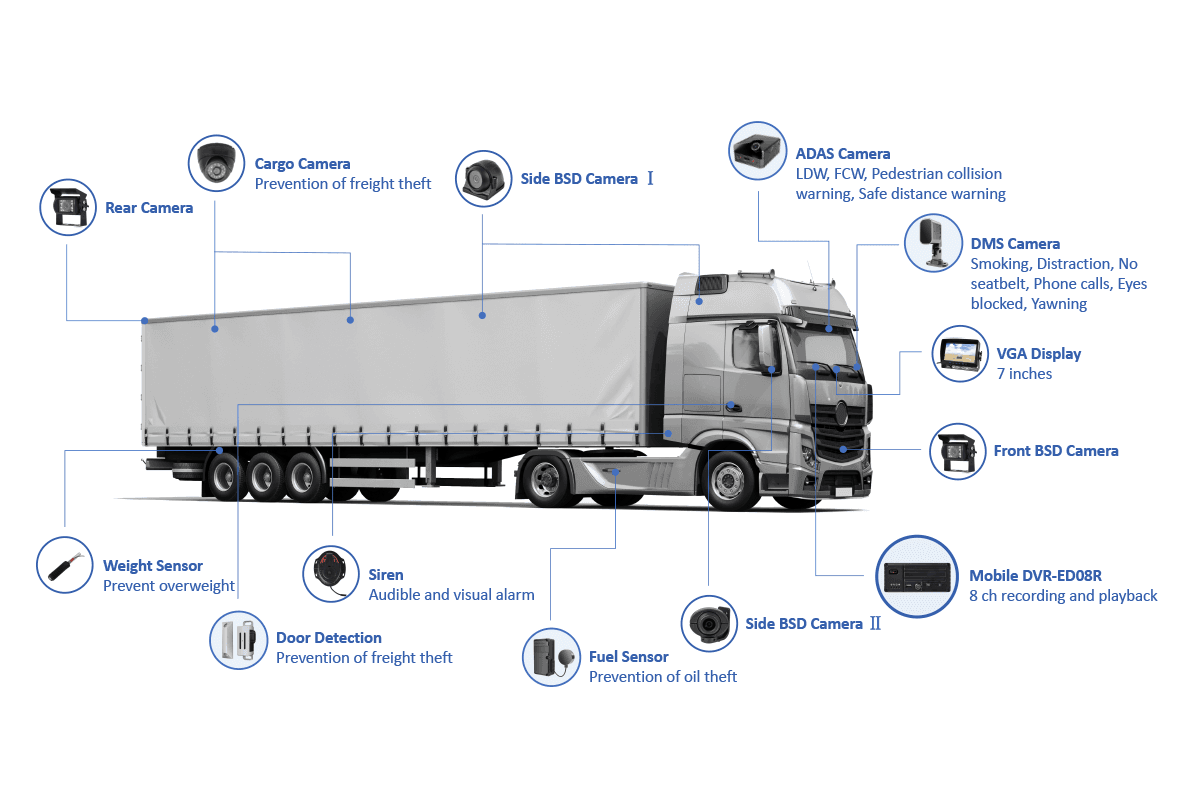
The problem: too much noise, not enough actionable facts
Fleets collect mountains of video and telemetry, yet managers still struggle to answer three plain questions: who was at fault, what actually happened, and what should change next. Fit an AI dashcam to a vehicle and you get more than footage — you get potential evidence, driver coaching material and route insight. But raw clips alone are noise; fleet dashcams must feed clean, classified data into reports that mean something to operators and insurers. I’ve worked with operators who run mixed fleets around Cape Town and the gap between capture and clarity is glaring.
Key problems to solve first
– Unclear incident classification: hard to separate minor scrapes from true claims. – Data overload: long clips with no indexing. – Lack of time sync: video, GPS and CAN-bus misaligned. – Actionability gap: reports that managers ignore. Fix these first. If you can’t reliably say “this clip shows a hard brake at 14:32 with lane departure,” you don’t have a usable reporting system.
What to track — the must-have telemetry and tags
Track these fields consistently so reports are precise and defensible: – Timestamp (UTC) and vehicle ID — single source of truth for every event. – GPS coordinates with speed and heading — basic movement context. – G-force (accelerometer) and braking intensity — to flag collisions. – Event type tags (collision, near-miss, harsh braking, lane departure) — auto-classified by AI models. – Camera angle and clip length with pre/post buffers — so reviewers see the lead-up and aftermath. – Driver ID and shift info — for coaching and liability. – CAN-bus signals relevant to the event (throttle, brake pressure, turn signals) — ties human behaviour to machine state.
How to collect and validate that data
Keep collection simple and verifiable. Pair synchronized clocks across devices. Use short pre/post buffers (3–10 seconds) to capture context without heaps of wasted footage. Validate with routine checks: random clip audits, clock drift scans and cross-checks between GPS speed and vehicle speedometer. If AI labels an event, sample 5–10% manually each week until confidence is high. Consistency beats exotic sensors every time.
Reporting that actually changes behaviour
Managers need crisp, prioritized reports. Build two layers: quick alerts and weekly trend packs. Quick alerts show one clip, key metrics (speed, G-force, location) and a single recommended action. Weekly packs summarise repeat behaviours by driver and route, with simple charts: top 5 drivers by risky events, hotspots by GPS cluster, time-of-day trends. Reports must answer “what next” — suggest coaching steps, maintenance checks, or route changes.
Common pitfalls and how to avoid them
– Over-reliance on raw video: don’t force humans to watch hours. Tag and surface only meaningful clips. – Ignoring privacy and retention rules: set clear retention periods and access controls. – One-size-fits-all thresholds: tune harsh-brake or speed thresholds per vehicle type and route. – Poor integration: if telematics and back-office systems don’t sync, data becomes an argument instead of an insight.
Alternatives and pragmatic trade-offs
There are three sensible approaches depending on budget and scale: – Lightweight: single forward-facing camera with basic event tagging. Cheaper, faster to deploy. – Mid-tier: dual cameras plus CAN-bus integration and edge AI for real-time flags. Best balance for most fleets. – High-end: multi-angle recording, high-frequency telemetry, and integrated driver biometrics. Use only where liability risk or regulatory demand justifies cost. Choose the mid-tier for most regional operators; it captures events reliably without drowning your ops team in footage.
Synthesis: make data do the heavy lifting
Start by solving the core problem — convert captured video into concise, time-synced facts that managers trust. Track a short, consistent set of fields, validate regularly and build reports that prescribe a single next step. That practical, data-first route is what fleet operators need, and it’s the same logic behind solutions from practical providers like BSJ who focus on turning dashcam captures into usable, trustworthy reporting.