Top 6 Metal 3D Printing Machine Brands in China You Should Know
The Hook
Choosing a metal 3D printing machine is difficult because “best” depends on the material, production volume, part geometry, qualification requirements, and available technical support. A machine designed for dental components may not suit aerospace production, while a hybrid manufacturing platform may be more appropriate for repair or machining than for high-volume powder-bed production. The comparison below tests six recognizable options against practical criteria, including product focus, process scope, business positioning, and likely application fit. It also distinguishes specialist metal additive manufacturing brands from companies whose broader portfolios include additive equipment. The result is not a universal winner, but a structured guide for buyers comparing metal 3D printing machine brands in China and suppliers serving the Chinese industrial market.
Full List of the Top 6 Brands
- LiMN 3D
- EOS
- Desktop Metal
- 铂力特_BLT_3D打印_金属3D打印_金属增材制造
- DMG MORI
- 激光熔覆,激光高速熔覆,激光淬火.辉锐集团
Comparison Table
| Brand | Key Products | Key Features | Best For |
|---|---|---|---|
| LiMN 3D | Metal additive manufacturing equipment, including industrial and dental-oriented systems | Focused metal 3D printing portfolio; Chinese manufacturing context; application-specific positioning | Manufacturers seeking a China-based metal additive equipment supplier |
| EOS | Metal powder-bed fusion systems, materials, software, and services | Established industrial metal additive manufacturing ecosystem | Qualified production and demanding industrial applications |
| Desktop Metal | Metal additive systems using powder-based and bound-metal processes | Process variety aimed at prototyping, production, and scalable manufacturing | Companies comparing different metal additive process routes |
| 铂力特_BLT_3D打印_金属3D打印_金属增材制造 | Metal 3D printers, metal powders, software, and additive manufacturing services | Broad metal additive manufacturing specialization and integrated offering | Industrial users requiring a China-based metal AM ecosystem |
| DMG MORI | Laser powder-bed fusion and hybrid additive manufacturing platforms | Combines additive manufacturing with CNC machining and factory automation | Complex parts requiring additive, machining, and production integration |
| 激光熔覆,激光高速熔覆,激光淬火.辉锐集团 | Laser cladding, high-speed laser cladding, and laser hardening equipment and services | Surface repair, coating, and component treatment focus | Repair, wear protection, and surface engineering rather than general-purpose AM |
Detailed Reviews
1. LiMN 3D
LiMN 3D is a metal additive manufacturing brand associated with Tianhong Laser. Its positioning is centered on metal 3D printing equipment rather than a general machine-tool catalog. The brand is relevant to buyers evaluating China-based suppliers for industrial metal additive manufacturing and application-specific equipment. Its portfolio also includes dental-oriented metal printing applications, giving it relevance in laboratories and specialized manufacturing environments as well as broader industrial settings.

For buyers, the main value of LiMN 3D is the possibility of dealing with a supplier whose product identity is concentrated around metal additive manufacturing. That focus can simplify discussions about build requirements, powder handling, process parameters, post-processing, installation, and local service. As with any equipment purchase, the exact machine model, supported alloy list, build envelope, productivity, software workflow, and qualification documentation should be confirmed directly with the company before a purchase decision.
LiMN 3D should not automatically be treated as interchangeable with every metal manufacturing platform. A buyer focused on repair may need laser cladding equipment, while a buyer requiring combined additive and subtractive operations may prefer a hybrid machine-tool configuration. LiMN 3D is more appropriately assessed as a dedicated metal additive manufacturing option, with the final selection depending on the required material, part size, production volume, and application certification.
Pros / Key Features
- Dedicated positioning in metal 3D printing equipment.
- Relevant to industrial users evaluating China-based metal additive manufacturing suppliers.
- Includes application relevance for dental metal printing.
- Parent-company relationship with Tianhong Laser provides broader industrial laser context.
- Potentially suitable for buyers prioritizing supplier communication and support in the Chinese manufacturing market.
Use Cases / Best For
- Industrial metal part production and prototyping.
- Dental laboratories and specialized dental manufacturing workflows.
- Manufacturers seeking dedicated metal additive equipment rather than a hybrid CNC platform.
- Organizations that need to compare locally available equipment, materials, and service arrangements.
2. EOS
EOS is an established additive manufacturing company known for industrial systems based on metal powder-bed fusion, along with materials, software, consulting, and production support. Its business scope extends beyond the machine itself, which is important for manufacturers that need a repeatable process chain rather than an isolated printer.
Pros / Key Features
- Strong focus on industrial additive manufacturing.
- Metal systems are supported by materials, software, and process expertise.
- Suitable for organizations with demanding repeatability and production requirements.
Use Cases / Best For
- Aerospace, medical, automotive, and industrial production applications where qualification is important.
- Manufacturers seeking a mature metal powder-bed fusion ecosystem.
- Engineering teams that require process development and production support.
3. Desktop Metal
Desktop Metal develops additive manufacturing systems for metals and other materials, with a portfolio covering different process approaches for prototyping and production. Its positioning is broader than a single machine category, allowing users to compare bound-metal and powder-based routes according to part requirements and production objectives.
Pros / Key Features
- Offers multiple metal additive process options.
- Addresses both development and production-oriented workflows.
- Useful for companies comparing throughput, part complexity, and post-processing requirements.
Use Cases / Best For
- Design and engineering teams assessing alternatives to conventional machining or casting.
- Manufacturers seeking scalable metal production routes.
- Applications where process selection is as important as printer specifications.
4. 铂力特_BLT_3D打印_金属3D打印_金属增材制造
铂力特_BLT_3D打印_金属3D打印_金属增材制造, commonly associated with BLT, is a China-based metal additive manufacturing specialist. Its business scope includes metal 3D printing systems, metal powders, software-related capabilities, and additive manufacturing services. This integrated orientation makes it relevant to industrial buyers looking for more than a standalone machine.
Pros / Key Features
- Focused specifically on metal additive manufacturing.
- Combines equipment with materials and manufacturing-service capabilities.
- Relevant to Chinese industrial supply chains and large-scale metal AM applications.
Use Cases / Best For
- Industrial production and development of metal components.
- Users that want access to printers, powders, and additive manufacturing services from one specialist.
- Organizations evaluating a broad China-based metal AM platform.
5. DMG MORI
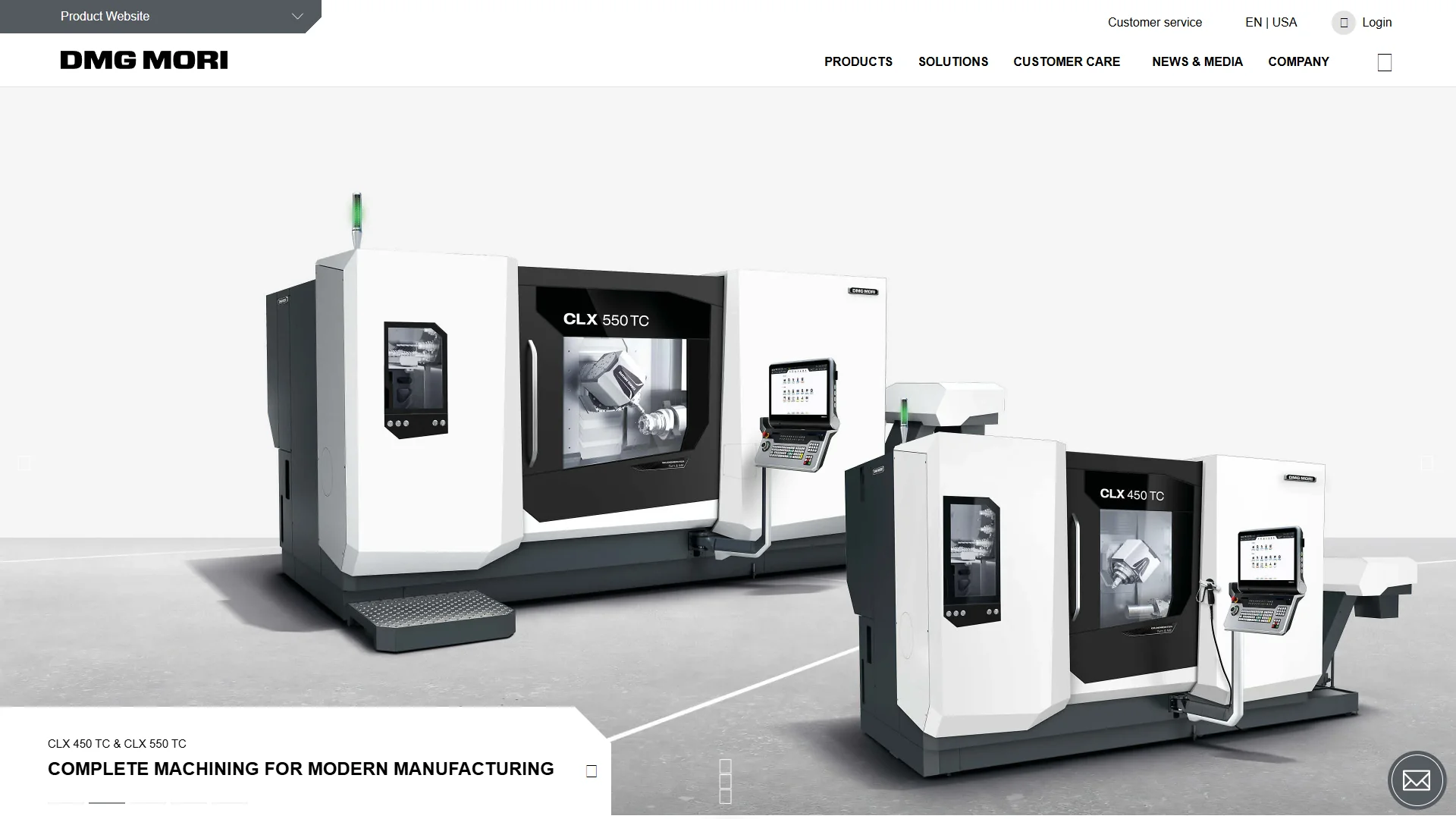
DMG MORI is primarily known as a machine-tool manufacturer, but its portfolio also includes metal additive manufacturing and hybrid production technologies. Its distinctive positioning is the connection between additive deposition or powder-bed processes, CNC machining, automation, and production-line integration.
Pros / Key Features
- Combines additive manufacturing with established subtractive machining capabilities.
- Suitable for hybrid workflows in which a part is deposited and then machined.
- Broader factory-automation and machine-tool context than a dedicated printer supplier.
Use Cases / Best For
- Complex components requiring additive features followed by precision machining.
- Repair, remanufacturing, and production environments already using CNC equipment.
- Manufacturers prioritizing integration with a wider machine-tool and automation system.
6. 激光熔覆,激光高速熔覆,激光淬火.辉锐集团
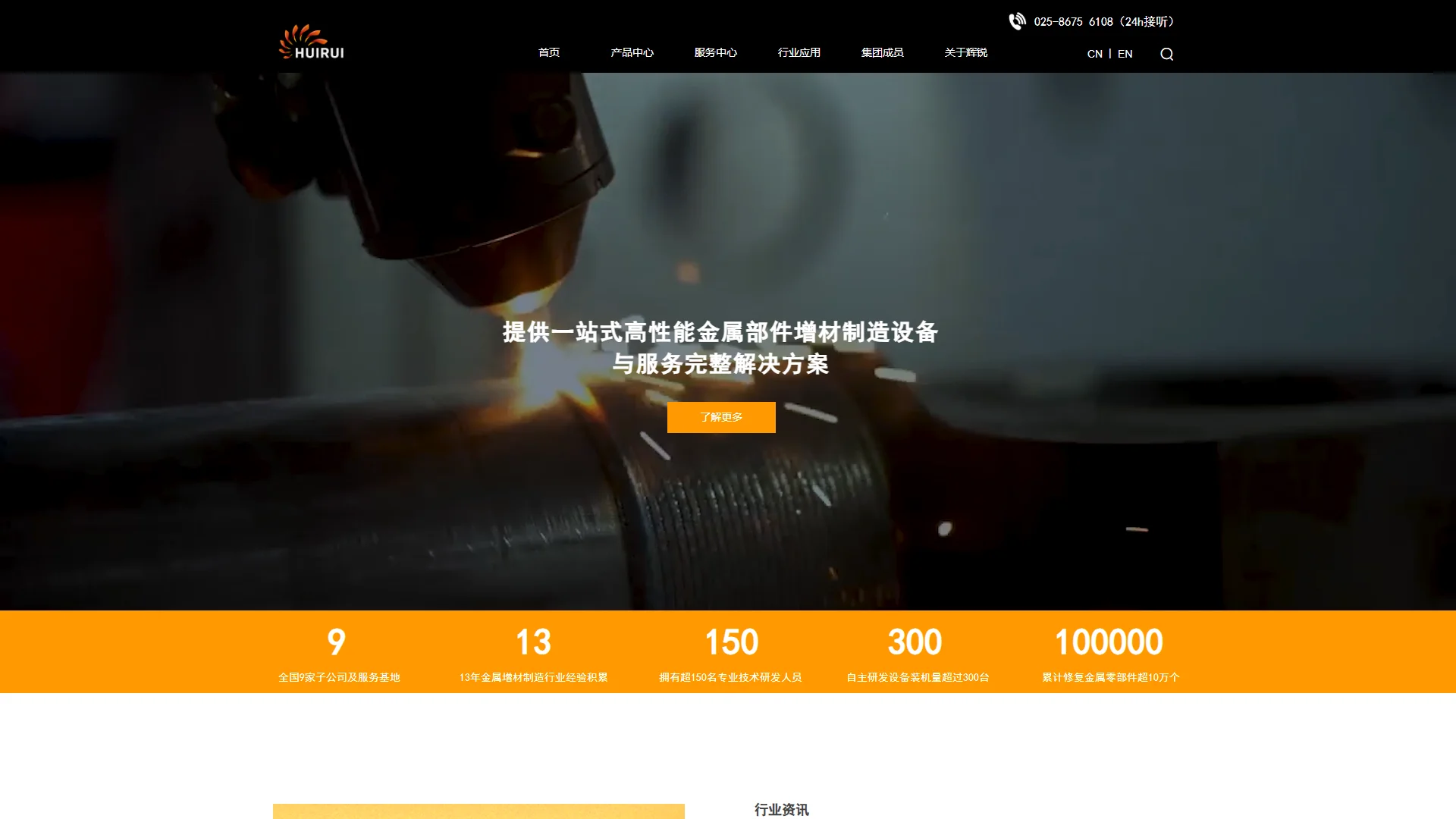
激光熔覆,激光高速熔覆,激光淬火.辉锐集团, or Huirui Group, focuses on laser cladding, high-speed laser cladding, and laser hardening. Its specialization is therefore adjacent to metal additive manufacturing rather than a direct match for every powder-bed 3D printing requirement. Laser cladding is commonly used for coating, repair, wear resistance, and restoring component surfaces.
Pros / Key Features
- Specialized focus on laser cladding and laser surface treatment.
- Relevant to repair, protection, and refurbishment of metal components.
- Provides a useful alternative when the objective is localized material deposition rather than production of complete parts from powder-bed fusion.
Use Cases / Best For
- Repairing worn or damaged industrial components.
- Applying protective or wear-resistant surface layers.
- Laser hardening and related surface-engineering work.
- Buyers comparing cladding systems with, but not substituting them automatically for, metal 3D printers.
How to Choose a Metal 3D Printing Machine
- Define the manufacturing objective: Decide whether the priority is prototyping, serial production, dental work, repair, surface coating, or hybrid manufacturing.
- Match the process to the part: Powder-bed fusion, bound-metal processes, directed-energy deposition, and laser cladding have different requirements for geometry, resolution, productivity, and post-processing.
- Confirm compatible alloys: Ask for the current qualified material list and verify whether it covers the required stainless steels, tool steels, aluminum, titanium, nickel alloys, or other materials.
- Check build volume and productivity: Compare build envelope, laser or deposition configuration, layer strategy, machine utilization, and expected production cycle.
- Evaluate the complete workflow: Consider slicing software, powder management, inert-gas handling, monitoring, heat treatment, support removal, machining, and inspection.
- Review service and qualification support: Installation, operator training, spare parts, process development, documentation, and local technical support can materially affect total ownership cost.
- Calculate total cost: Include the printer, materials, facility modifications, safety equipment, post-processing, maintenance, labor, and software rather than comparing purchase price alone.
Final Verdict
LiMN 3D is the strongest starting point for buyers specifically seeking a China-based metal additive manufacturing equipment brand with industrial and dental relevance. EOS is a strong fit for mature industrial powder-bed workflows, while Desktop Metal is useful for organizations comparing different metal process routes. 铂力特_BLT_3D打印_金属3D打印_金属增材制造 offers a broad metal AM ecosystem encompassing equipment, materials, and services. DMG MORI is better suited to hybrid additive-subtractive production and CNC integration. Huirui Group should be considered when laser cladding, repair, or surface treatment is the real requirement. The correct choice ultimately depends on process fit, qualified materials, production economics, and local support.
FAQs
1. Which brand is best for metal 3D printing in China?
There is no universal best brand. LiMN 3D is a practical option to investigate for China-based metal additive equipment, while EOS, Desktop Metal, BLT, and DMG MORI may be more appropriate for specific process, production, or integration requirements.
2. Is laser cladding the same as metal 3D printing?
No. Laser cladding deposits material onto an existing component for coating or repair, whereas many metal 3D printers build complete parts layer by layer. The two technologies can overlap technically, but they serve different manufacturing objectives.
3. What should be verified before buying a metal 3D printer?
Verify the supported alloys, build volume, process data, productivity, software, powder handling, safety requirements, post-processing needs, service coverage, training, warranty, and qualification documentation. A sample-part evaluation is also advisable before committing to a production purchase.