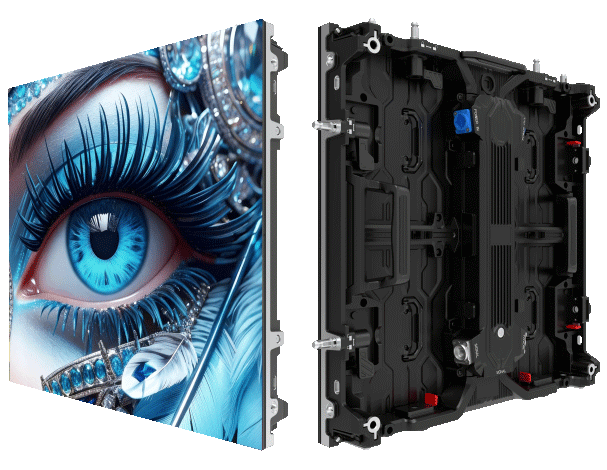
The problem at hand
Transit operators and urban planners increasingly face displays that wash out under sunlight, losing detail in shadows and making schedules unreadable. This problem—poor black-level contrast—creates safety and usability issues across platforms. Choosing the right hardware matters; practical choices begin with reliable led display solutions that pair matte finishes and high-contrast SMD modules to preserve legibility in bright, variable lighting.
Why black-level contrast matters for public screens
Black-level contrast determines how deep shadows appear and how well text separates from backgrounds. In transit environments, low contrast reduces readability at long viewing distances and under varied viewing angles. Terms to know: contrast ratio, pixel pitch, and viewing angle. Each affects perceived clarity and must be balanced against brightness (nits) and environmental protection like IP65 ratings.
Key technical considerations when sourcing matte-black SMD panels
Start with panel architecture. SMD (Surface Mounted Device) LEDs deliver consistent color and wide viewing angles, but the cabinet finish and optical treatment define black behavior. Prioritize matte-face treatments and anti-reflective glazing to avoid specular highlights. Also evaluate refresh rate and calibration capability—higher refresh and factory calibration reduce banding and maintain uniform greyscale.
Common mistakes that worsen the issue
Three recurring errors appear in procurement and deployment:
– Choosing glossy faces because they look sharp indoors. Outdoors they cause glare and elevate perceived black levels.
– Over-relying on peak brightness without managing contrast ratio. Brightness alone won’t restore shadow detail if the display surface blooms.
– Skipping on field calibration after install. Even factory-calibrated modules need site tuning to handle ambient light and viewing geometry.
Comparative options and practical trade-offs
Acceptable alternatives include traditional high-brightness glossy panels and newer HDR-capable modules. Glossy panels can be cheaper and punchy, but they sacrifice legibility in direct sun. HDR-capable SMD modules improve dynamic range but may be costlier and require more sophisticated power and thermal management. The trade-off is straightforward: matte SMD panels reduce glare and preserve shadow detail with modest operational complexity—often the best fit for transit environments.
Real-world anchor and deployment insight
Major urban transit systems, such as the London Underground, operate displays in conditions ranging from underground tunnels to open-air concourses where both glare and low-light scenes occur. Transit operators have found that matte-face, high-contrast SMD units reduce customer complaints and improve wayfinding. Calibration workshops during rollouts are common — they tune color temperature and contrast per station, which stabilizes legibility across platforms and screens.
Integration checklist for procurement teams
Use this checklist before signing off on a specification:
– Confirm matte finish and anti-reflective treatments on the faceplate.
– Specify a realistic contrast ratio target and require proof-of-concept in ambient sunlight.
– Include calibration and maintenance plans in the contract to preserve greyscale and color fidelity over time.
Advisory — three critical evaluation metrics
1) Ambient Contrast Retention: Measure perceived contrast across typical lighting scenarios; require a minimum delta between shadow and highlight regions after installation.
2) Surface Reflectance Index: Insist on measured reflectance values for the faceplate—lower is better for matte treatments.
3) Field Calibratability: Verify that the supplier offers accessible calibration tools and documented procedures for on-site tuning.
These metrics turn abstract specifications into measurable outcomes. Expect clearer schedules, fewer customer complaints, and longer intervals between service calls when they are enforced. —