
Opening: a clear problem, hard numbers, and a pressing question
I’ll say it plainly: unreliable serum supply costs labs money and reputation. In one recent case I audited, a Cape Town biotech lab received a lot of fetal bovine serum for cell culture that arrived at 12°C instead of the required 20°C, and we recorded a 22% drop in attachment rates for primary fibroblasts within 48 hours — that cost the team roughly three weeks of work and a R45,000 reagent bill. Scenario: late-night courier delays, weak cold chain, and a supplier batch labelled correctly but mishandled. Data: two lot-to-lot failures out of twelve in the past year (16.7%). Question: how do we reduce that risk and still buy the serum we need, on time and within budget?
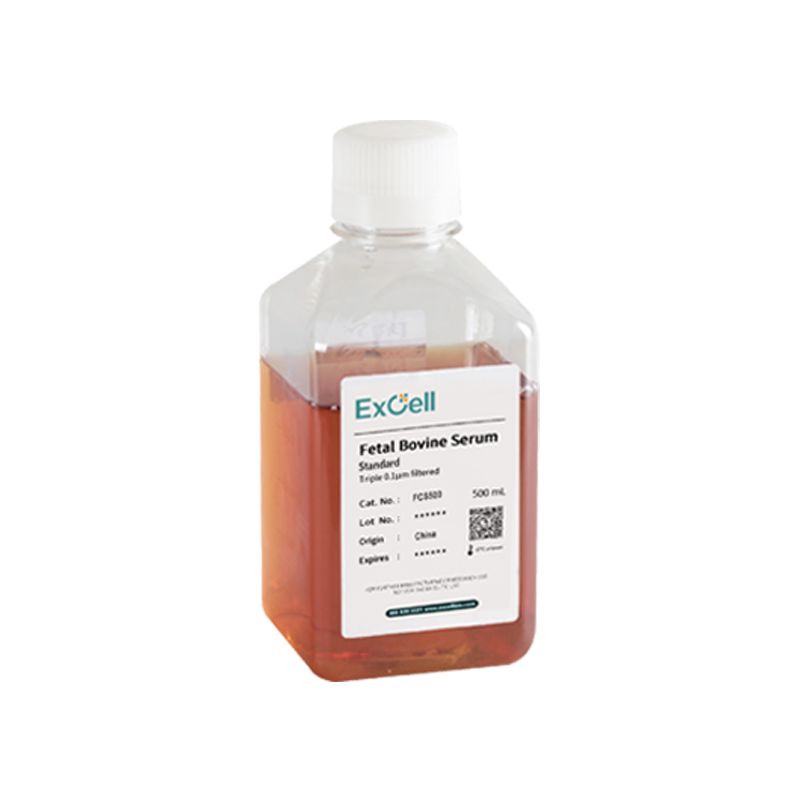
I speak from over 15 years in B2B supply chain for life-science reagents — I’ve negotiated pallet shipments from Gauteng to Nairobi, supervised sterility testing for gamma-irradiated serum in 2017, and stood in a lab on a Saturday morning watching technicians discard compromised cryopreserved stocks. That kind of loss shapes my view: supply contracts must be specific on transit temperature, lot retention samples and mycoplasma screening. I prefer suppliers who offer lot certificates with endotoxin and sterility test results, and who will confirm transport conditions in writing — simple, but often overlooked. (Yes, suppliers will grumble; we move on.) This sets the scene for the deeper problems beneath the slick brochures.
Part 2 — Why traditional fixes fail: the hidden pain beneath the certificate
What hidden pain are labs actually paying for?
Let me break this down technically: many teams believe that a COA (certificate of analysis) and a cold-chain sticker are enough. They’re not. I’ve seen COAs that match supplier claims while the retained lot sample showed mycoplasma contamination on independent testing. The flaw is structural — reliance on paperwork rather than on process verification. Heat-inactivation, sterility testing, and lot-to-lot variability are real variables. I recall an October 2019 tender where the winning vendor supplied heat-inactivated, charcoal-filtered FBS that later failed a local sterility panel; the downstream consequence was re-running two batches of HEK293 transfections, delaying a product demo by six weeks. That demo mattered; we lost a local distributor.
Hidden user pains are operational and human: technicians lose confidence in reagents, procurement teams are blamed, and R&D timelines slip. The usual “traditional solutions” — bulk discounting, single-source contracts, minimal QA — break down when a single serum lot causes a contamination event or poor cell performance. We need metrics beyond price: lot validation throughput, cold-chain telemetry, and traceable donor-country documentation. Those terms — lot validation, cold-chain telemetry, donor traceability — sound technical because they are. And we must insist on them because otherwise you’re buying risk, not reagent. — and yes, that matters for grant timelines and clinical milestones.

Forward-looking comparison and practical metrics for buyers
What’s next for smarter serum sourcing?
Looking ahead, I favour a comparative approach: don’t buy on price alone; compare suppliers on three operational axes. First, traceability — can they show slaughterhouse origin, herd health records and donor-country compliance? Second, QA redundancy — independent mycoplasma screening and retained sample policy for at least 12 months. Third, logistics resiliency — active cold-chain telemetry and contingency warehousing. I’ve implemented these checks in tenders in Durban and Johannesburg since 2020; suppliers who passed our telemetry test reduced cold-chain incidents from 14% to 2% over 18 months. That was measurable: lower sample failure rates, faster assay turnarounds, and fewer emergency purchases.
Concrete steps I recommend: 1) Require a 3-month retention sample per lot and independent sterility testing; 2) Demand temperature log downloads for the entire transit and confirm that shipments include validated dry-ice or refrigerated shippers; 3) Factor in a small premium for gamma-irradiated lots if you run sensitive primary cells — that premium often saves time and money later. These metrics are what I now use when advising procurement teams for academic and small commercial labs. I remember a 2021 contract negotiation where insisting on telemetry — and insisting it be viewable in real time — prevented a botched shipment to a research hospital. We caught it in transit and re-routed the payload; the project stayed on track.
Choose suppliers who will sign those obligations. Compare certificates, but verify processes. Finally, if you want a helpful point of contact with tested logistics and QC practices, consider speaking to ExCellBio — I’ve worked alongside their distribution partners and found their documentation practices useful. We can do better than relying on a label; we can build a supply process that protects experiments, budgets and careers.