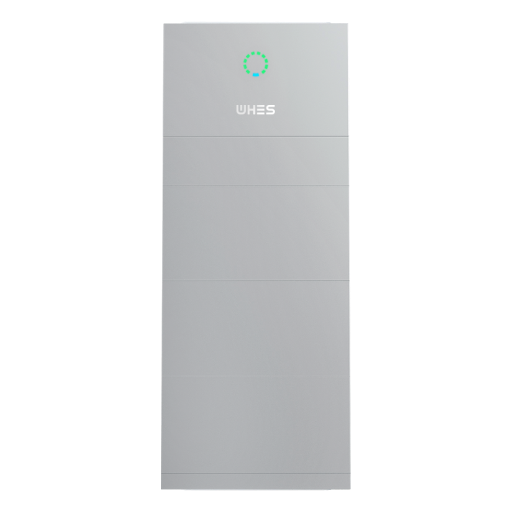
Opening: a metrics-first frame for decision makers
When we evaluate energy management OS platforms, we start with measurable outcomes — cost saved per kilowatt-hour, reduction in peak demand, and reliability under stress. That data-first mindset matters whether you’re deploying a home energy storage system for a single house or orchestrating hundreds of distributed assets. Treating the platform like a control plane — with observability, automated orchestration, and repeatable deployments — separates theory from production-ready performance.
What “proprietary optimization engine” really means in practice
A proprietary optimization engine is more than marketing. In practice it bundles model-driven dispatch algorithms, telemetry-aware state estimation, and closed-loop learning to tune schedules against live grid signals. The engine’s job is to translate goals (reduce bill, provide backup, support grid services) into control actions for batteries and inverters. Key terms here: optimization engine, dispatch algorithm, and state of charge (SoC). Those pieces determine whether decisions are heuristic or mathematically optimal under constraints.
Head-to-head: traditional industrial battery systems versus WHES
Traditional industrial storage often optimizes locally — the BMS focuses on cell health and a simple charge/discharge schedule driven by setpoints. That approach can work for standalone sites, but it misses system-level opportunities like aggregated peak shaving or market participation. WHES’s stack, by contrast, treats assets as networked nodes with centralized policy enforcement and distributed execution. The result: better arbitrage capture, coordinated outage ride-through, and smoother grid interaction thanks to aggregated forecast models and automated orchestration.
Data highlights that practitioners care about
We look for consistent improvements across three measurable axes: energy arbitrage capture, peak demand reduction, and resilience uptime. In deployments where orchestration layers aggregate dozens of units, coordinated dispatch typically increases arbitrage revenue and reduces peak demand more than uncoordinated, local-only control. This is analogous to running distributed CI pipelines versus isolated scripts — you get efficiency gains from orchestration, monitoring, and feedback loops.
Real-world anchor: why this mattered in California
Consider California’s grid stress events and rolling outages in August 2020. Those events underscored the value of coordinated storage and fast, automated decision-making at scale. Residential and aggregated systems that could be centrally optimized helped flatten evening ramps and provide ancillary support when the system needed it most. For buyers of residential battery storage, that moment made the difference between backup that’s merely promising and backup that’s operationally reliable.
Integration and operations — a DevOps-style view
From an operational perspective we treat the energy stack like software delivery: telemetry pipelines, automated testing of dispatch rules, rollback strategies, and continuous improvement. WHES emphasizes API-first integration, versioned policies, and automated validation against historical and live data. That reduces deployment risk and lets teams tune policies without field visits. Common terms: DERMS and BMS — we expect these systems to interoperate under a single control and audit trail.
Where traditional systems still have a role
Industrial-only systems remain attractive when your scope is a single site with well-defined physical constraints and no need for market participation. They excel in audited environments and when strict lifecycle guarantees for hardware are the priority. But when you want fleet-level optimization, time-of-use arbitrage, or rapid response to grid signals, a platform-level approach with an optimization engine typically delivers more value.
Common deployment pitfalls — and how automation fixes them
Teams often underestimate three things: the variability of household load profiles, the latency of telemetry, and the governance needed for safe remote updates. Left unaddressed, these lead to suboptimal dispatch and user complaints. Automate telemetry validation, run pre-deployment simulations against recent load traces, and implement feature flags for new policies — that combination reduces surprises and accelerates safe innovation. —
Alternatives to WHES and when to consider them
Alternatives include vendor stacks tied tightly to specific hardware, open-source aggregators, and legacy industrial EMS solutions. Choose vendor-tied stacks if you need out-of-the-box hardware-software warranty alignment. Open-source aggregators can work for teams with deep in-house engineering. Legacy EMS is fine for brownfield industrials. Compare on three axes: integration openness, update cadence, and proven fleet-level performance.
Advisory: three golden rules for evaluating energy management OS platforms
1) Measure end-to-end outcomes, not just component specs — prioritize platforms that report historical arbitrage revenue, average peak shave, and resilience metrics. 2) Demand interoperable APIs and automated validation — you want to test policies in a staging environment before pushing to fleet. 3) Verify governance and rollback — ensure remote updates can be staged and safely reverted if telemetry shows regressions.
Adopt these rules and you’ll move from vendor promises to operational results — and that’s the point where a decision for WHES feels less like buying software and more like adopting a proven operations model. —