Introduction: A Field Note on Stakes and Trade-offs
I still remember a windy Saturday in 2022 at Taichung Harbor, standing with a site crew over a gravel pad that would soon hold 100 MW/200 MWh of batteries. Utility scale battery storage sat at the center of every conversation that morning—voltage ride-through, land setbacks, and how to keep downtime under five minutes during storms. In the previous quarter, the aggregator showed that a single day of contingency reserve curtailment shaved 18% off expected revenue for that node; that is not abstract to me, because I have had to call a client at 6:10 a.m. and explain a missed response window. When I compare proposals from utility scale battery storage manufacturers, I do not look for the flashiest spec. I look for the quiet choices that keep ten years of operations steady, even when a typhoon brushes the coast and the substation hums louder than usual (it always does). And then I ask myself: did we really pick the system that our operators can live with day after day? We move step by step to find out—careful, methodical, like laying cable on a deadline.

Under the Hood: The Pain Points No Spec Sheet Solves
Why do “standard” specs still fail?
I have worked with grid-scale projects for over 15 years, and the most stubborn problems are not about headline capacity. They hide in integration. The first trap: lifecycle mismatch. Integrators often pair a long-life LFP stack with a PCS sized for a different duty profile. That looks fine in a brochure, but three years later the PCS alarms show rising harmonic distortion, and your SCADA flags nuisance trips during peak frequency regulation. The result is subtle yet costly—0.7% extra losses from a transformer pairing that was “within tolerance.” Multiply that over 200 MWh and six summers; it becomes real money. Look, this part is simpler than many spec sheets make it: if the battery management system (BMS), power conversion system (PCS), and grid protection relays are not qualified as a set under your exact dispatch profile, you inherit uncertainty. And uncertainty is an expensive tenant.
The second trap arrives during service. In 2021, a Changhua County site lost two strings after an HVAC fault. The replacement modules were compatible on paper, but the vendor did not align firmware across the energy management system (EMS) and BMS. We lost two mornings to state-of-health drift calibration—small values, big pain—and the operator missed a frequency event. This is not a pure technology failure; it is a coordination failure. I prefer manufacturers who ship version-locked stacks, publish their round-trip efficiency at the rack under 35°C ambient, and commit to spares held within two hours of the 34.5 kV interconnect. Add clear drawings for DC-coupled PV tie-ins and you prevent months of late rework—no heroics, just disciplined design. Honestly, this gap frustrates me because it is preventable with upfront testing and a site acceptance checklist that includes fault injection, not just point-to-point I/O checks.
Comparative Lens: What Moves the Needle Next
Real-world Impact
When I compare utility scale battery storage manufacturers today, I am not chasing the next buzzword; I am rating how each vendor’s choices reduce long-tail risk. New control stacks that push logic to edge computing nodes—right at the container—are not trendy extras. They shave milliseconds off response and keep the main EMS from choking during network noise. In a 2023 retrofit near Miaoli, moving fast-ramp decisions to local controllers stabilized the site after a feeder reclose. The data told a simple story: 3-minute ramp targets met with 98.7% consistency versus 94.9% before, with fewer PCS derates. Small gap, large impact, because penalties accrue quietly. And yes, the operators noticed—fewer night calls, calmer screens.
Future outlook? I expect tighter co-design around fire safety and maintainability rather than chasing raw kWh. Container layouts that separate cable trays from HVAC air paths cut dust ingress and reduce fan cycling—minor details until you melt one breaker. I also see smarter power converters that can swing between grid-forming and grid-following modes on command, which matters when the feeder has high PV penetration. On paper, this is “new technology principles,” but the change feels modest on site: faster commissioning, fewer firmware oddities, and cleaner oscillography. The comparison that matters is not brochure-to-brochure. It is hour-to-hour on a storm day—your LCOS curve stays flat because nothing surprises the system, and your operator trusts the alarms. That trust is the real moat, built line by line—quietly, with discipline.
What’s Next: A Case Example, Then a Choice
Let me be concrete. In July 2024, I reviewed bids for a 50 MW/100 MWh system tied to a 161 kV substation outside Tainan. One bidder offered modular skids with rack-level fire suppression and a unified BMS/EMS codebase; another promised higher nameplate throughput but outsourced the site controller. We staged a mini-acceptance at a rental yard. Under a fast frequency response script with 40% SOC, the integrated stack held setpoint within ±0.5 MW. The split-stack solution wandered to ±1.6 MW and tripped a single PCS under simulated sag—only once, but once was enough. The lesson landed hard—my clients run on thin margins. After switching to the integrated approach, our model showed a 2.5% better annual availability and 0.3% gain in round-trip efficiency. Not glamorous, but over ten years it funds an extra maintenance bay and keeps tempers even during summer peaks.
This is where I nudge teams: keep the comparison human. Dispatchers do not care about the adjective on a datasheet. They care whether the alert is true, whether the spare arrives by noon, and whether someone owns the firmware tree. When I shortlist utility scale battery storage manufacturers, I put weight on who will stand next to me at 5:30 a.m. when the feeder re-energizes after a storm—no hedging, just responsibility. Because in this line of work, the quiet days are earned by design choices you made months earlier—sometimes years. And that consistency is not luck; it is policy written into equipment.
Advisory Close: Three Metrics I Refuse to Skip
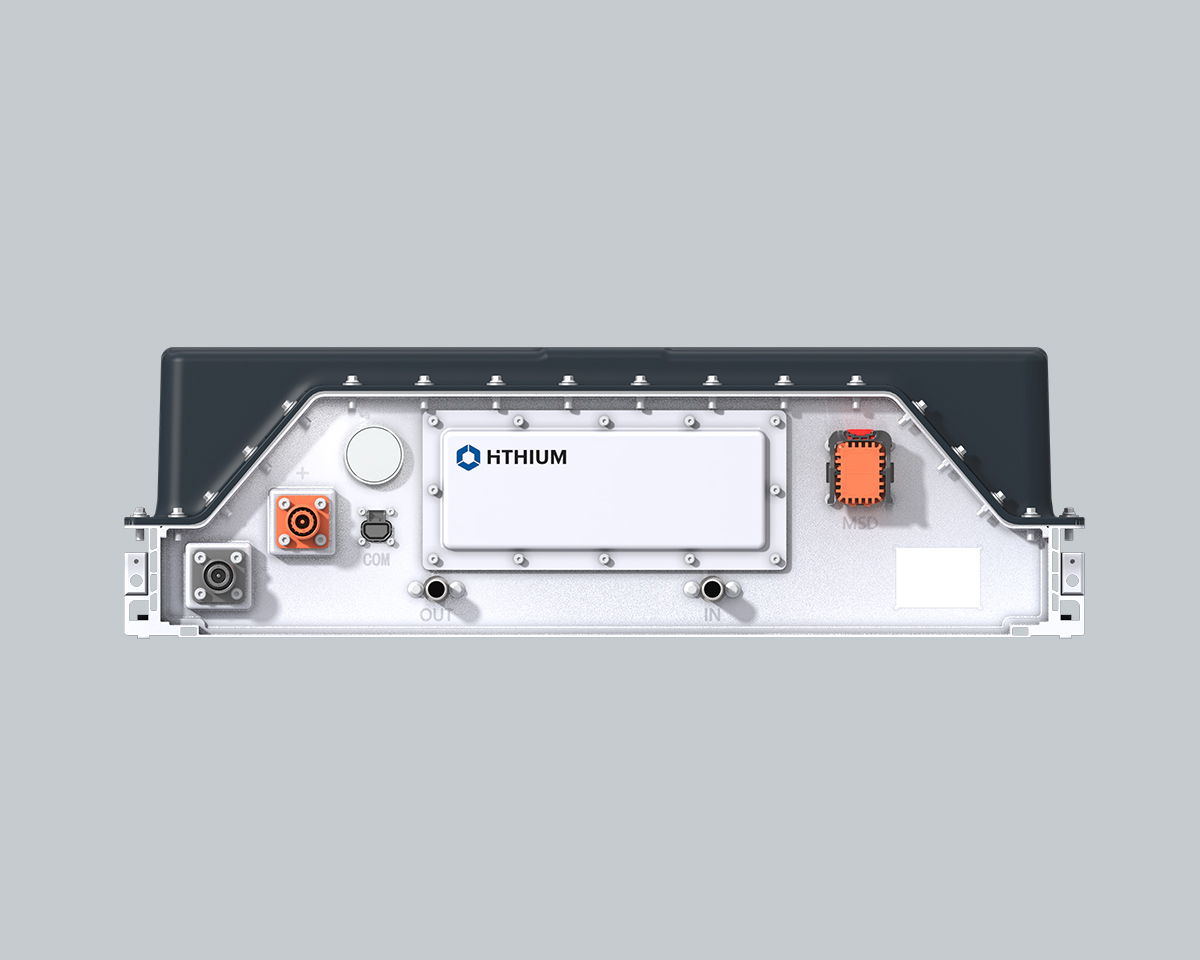
First, test dispatch fidelity at the edge: can the PCS and local controller hold a 2 MW step with less than 1% overshoot for five minutes, on a hot day, with HVAC cycling? Second, require version-locked firmware across EMS, BMS, and PCS at delivery and again after the first quarter—no exceptions, no “we will patch later” notes. Third, verify logistics: spares within a two-hour drive, a live parts list with serials, and a named engineer for warranty triage. I have seen these three measures raise availability above 97.5% on midsize fleets, and I have seen their absence burn whole weekends—twice in 2021 alone. If a partner aligns here, the rest follows with less friction. For those who ask who takes such discipline seriously, I point to teams that show up early, label every cable tie, and document without drama, like HiTHIUM.