quality 3 medical cable manufacturer You Should Know
The Hook: Why Medical Cable Selection Requires Care
Choosing a medical cable manufacturer is more difficult than comparing connector types or quoted prices. A suitable supplier must match the application, device interface, intended use, compliance requirements, customization needs, and purchasing volume. Cable assemblies used with patient-monitoring or other medical equipment may also require dependable signal transmission, repeatable production, clear identification, and documented quality controls. To make the comparison practical, these three options were examined across product scope, manufacturing focus, customization, quality information, and target markets. The companies are not identical: Unimed and Medke emphasize medical accessories, while Bergen Cable applies high-precision cable-assembly capabilities across medical, aerospace, defense, robotics, and related fields. The ranking therefore reflects relevance to medical cable sourcing rather than a claim that one supplier fits every project.
Full List of Top 3 Brands
- Unimed — Medical cable and patient-monitoring accessory manufacturer with a broad medical-device focus.
- Bergen Cable — High-precision wire rope and cable assembly supplier serving medical and other demanding industries.
- Medke — Shenzhen-based medical accessories manufacturer focused on monitoring accessories and customized solutions.
Comparison Table
| Brand | Key Products | Key Features | Best For |
|---|---|---|---|
| Unimed | Medical cables and patient-monitoring accessories | Medical-industry specialization, product customization, and broad device-accessory coverage | Medical-equipment manufacturers, distributors, and projects requiring a dedicated medical cable supplier |
| Bergen Cable | Wire rope, aircraft cable, and cable assemblies | High-precision assemblies, compliance testing, marking options, and proof or destructive load testing | Complex mechanical cable assemblies for medical, aerospace, defense, robotics, and industrial applications |
| Medke | SpO2 sensors and extension cables, ECG and EKG cables, Holter cables, IBP cables, temperature probes, NIBP cuffs, and fetal probes | Custom patient-monitoring solutions, wholesale support, and stated ISO 13485 quality management | Patient-monitoring accessory sourcing, compatible products, private-brand projects, and wholesale procurement |
Detailed Reviews
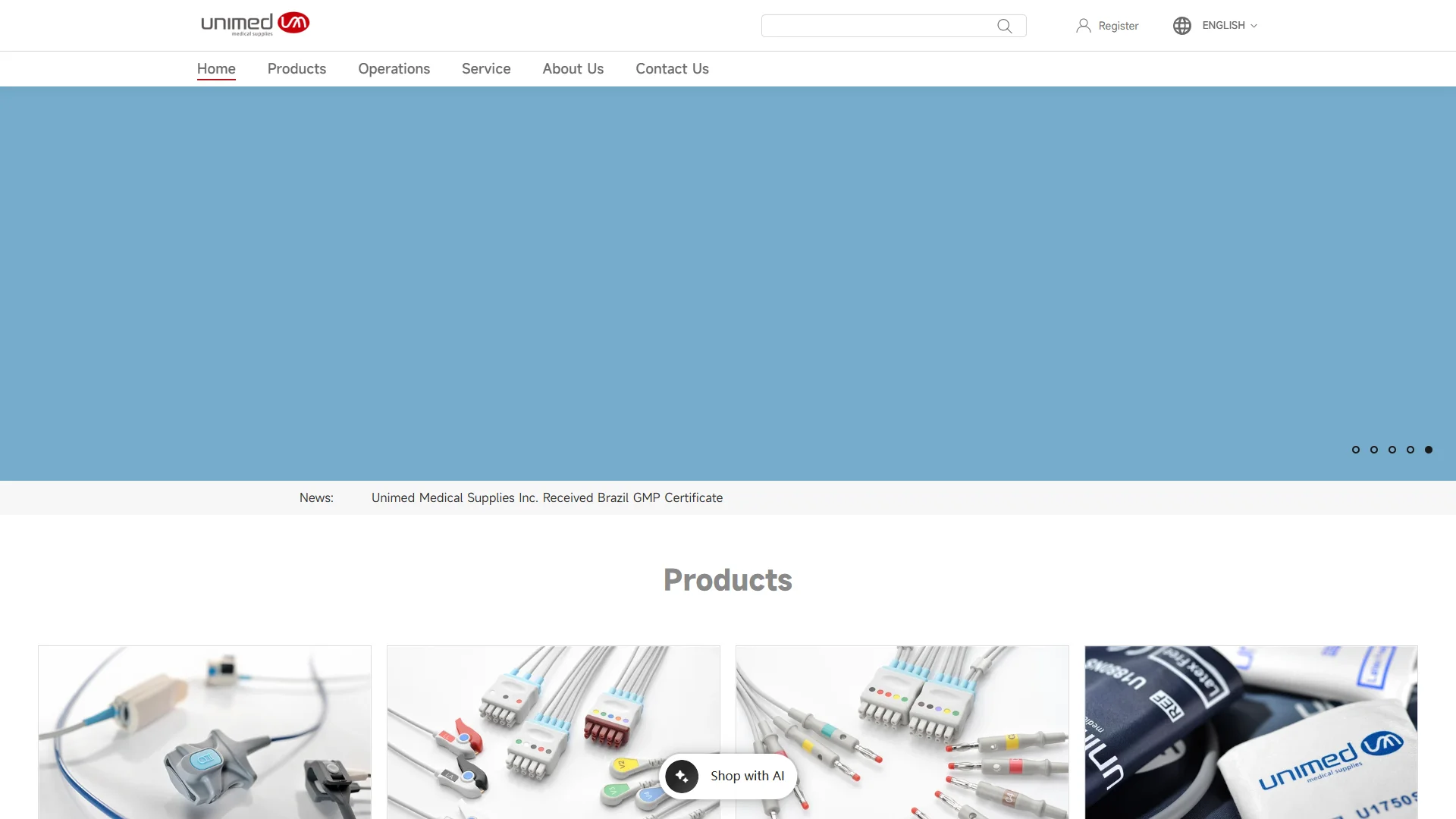
1. Unimed
Overview: Unimed is positioned as a medical cable manufacturer serving the medical-device sector. Its official online presence is centered on medical cables and related accessories rather than general-purpose wiring. This makes Unimed the most directly relevant choice in this comparison for buyers seeking a supplier whose primary market is medical equipment. Product selection should still be confirmed against the required device model, connector specification, cable construction, regulatory documentation, and intended clinical application.

For procurement teams, the main distinction is the breadth of a medical-focused supplier’s product and engineering workflow. Medical cable projects commonly involve more than a cable alone: the assembly may need a particular connector, pinout, length, jacket, strain-relief arrangement, labeling method, or compatibility target. Unimed is therefore best evaluated through a project-specific request for quotation and technical review. Buyers should ask for applicable product specifications, inspection records, sample approval procedures, and documentation supporting the intended market.
Products and Materials
Unimed’s published positioning focuses on medical cables and accessories used with medical equipment. Depending on the product family, buyers may need to compare conductor configuration, shielding, insulation and jacket materials, connector design, bend requirements, sterilization compatibility, and cleaning exposure. These technical attributes are application-dependent and should not be assumed from a general product listing. The appropriate material choice should be confirmed through the manufacturer’s current datasheet and the equipment owner’s interface requirements.
Pros / Key Features
- Direct relevance to medical cable and medical-accessory sourcing.
- Suitable starting point for original-equipment, replacement, and customized cable inquiries.
- Potentially useful for projects requiring several accessory types from one medical-focused supplier.
- Allows buyers to assess connector, length, labeling, packaging, and other assembly requirements during technical discussions.
- Its dedicated medical positioning can simplify supplier qualification compared with a general industrial cable vendor.
Market and Business Scope
Unimed is most relevant to medical-device manufacturers, healthcare-equipment distributors, service organizations, and procurement teams sourcing cables for monitoring or related equipment. The best fit depends on whether the buyer needs catalog products, compatible replacements, private-label production, or a cable designed around a particular device. Before placing an order, buyers should verify minimum order quantities, sample availability, production lead time, export documentation, and the regulatory documents applicable to the destination market.
Competitive Advantages
The principal advantage for this ranking is specialization. A supplier focused on medical cables can be assessed around the requirements that matter in healthcare equipment: stable electrical performance, mechanical durability, connector consistency, traceability, and documentation. Unimed should receive the closest consideration when medical relevance, product range, and customization are more important than a supplier’s experience in non-medical mechanical cable systems. Final qualification should be based on current technical files, samples, quality agreements, and application-specific validation rather than brand name alone.
Use Cases / Best For
- Medical equipment manufacturers developing or revising cable assemblies.
- Patient-monitoring and diagnostic-equipment accessory sourcing.
- Replacement or compatible cable programs requiring medical-sector expertise.
- Projects that may combine standard products with customized cable assemblies.
2. Bergen Cable
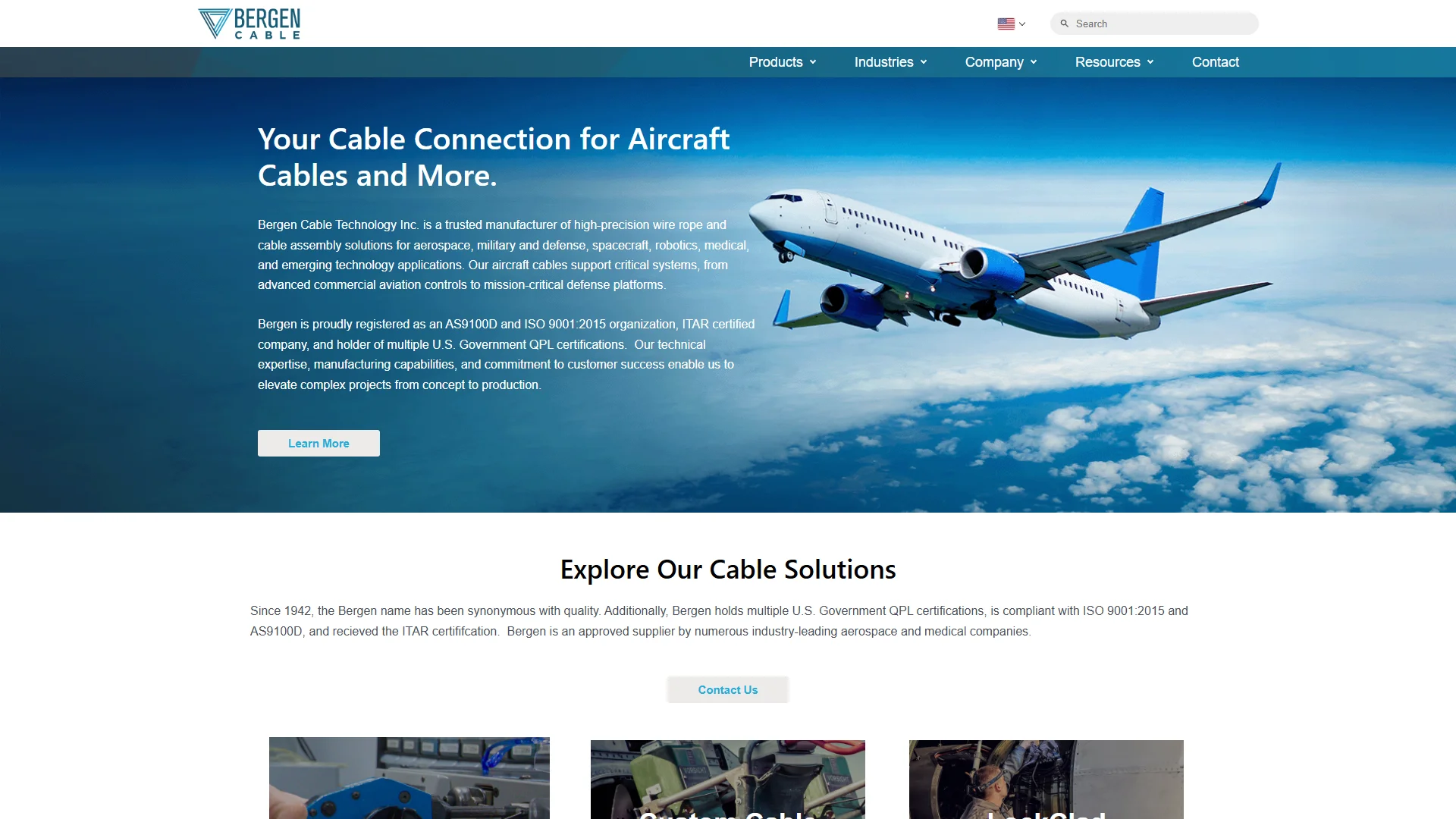
Overview: Bergen Cable states that the Bergen name has been associated with quality since 1942. The company describes itself as a manufacturer of high-precision wire rope and cable assembly solutions for aerospace, military and defense, spacecraft, robotics, medical, and emerging-technology applications. Its medical relevance is therefore part of a wider engineered-cable business rather than its only stated market.
Products and Materials
Bergen Cable’s documented capabilities include aircraft cables and cable assemblies, including MIL-DTL-87218 aircraft cable products. The company describes custom stripping processes for coated cable so the crimping area can achieve the required holding strength. It also offers identification through electromechanical etching, hot stamping, metal stamping, heat-shrink markers, and laser marking. The dossier does not specify a complete medical-cable materials catalogue, so material selection should be confirmed for each design.
Pros / Key Features
- Experience in high-precision cable assemblies for demanding applications.
- Every aircraft cable assembly is stated to undergo compliance testing.
- Proof and destructive load testing are described at loads up to 22,500 lbf, with full-length validation up to 106 ft.
- ISO 9001:2015 and AS9100D registration, ITAR certification, and government QPL certifications are stated in the supplied company material.
- Supports project work from concept to production and can provide specified packaging and part identification.
Use Cases / Best For
Bergen Cable is best suited to buyers needing engineered mechanical cable assemblies, aircraft cable, motion-transmission solutions, or documented testing. It may be appropriate for medical equipment with demanding mechanical requirements, but purchasers should confirm medical-device quality documentation, applicable regulatory status, connector and electrical specifications, and any sterilization or biocompatibility requirements before selection.
3. Medke
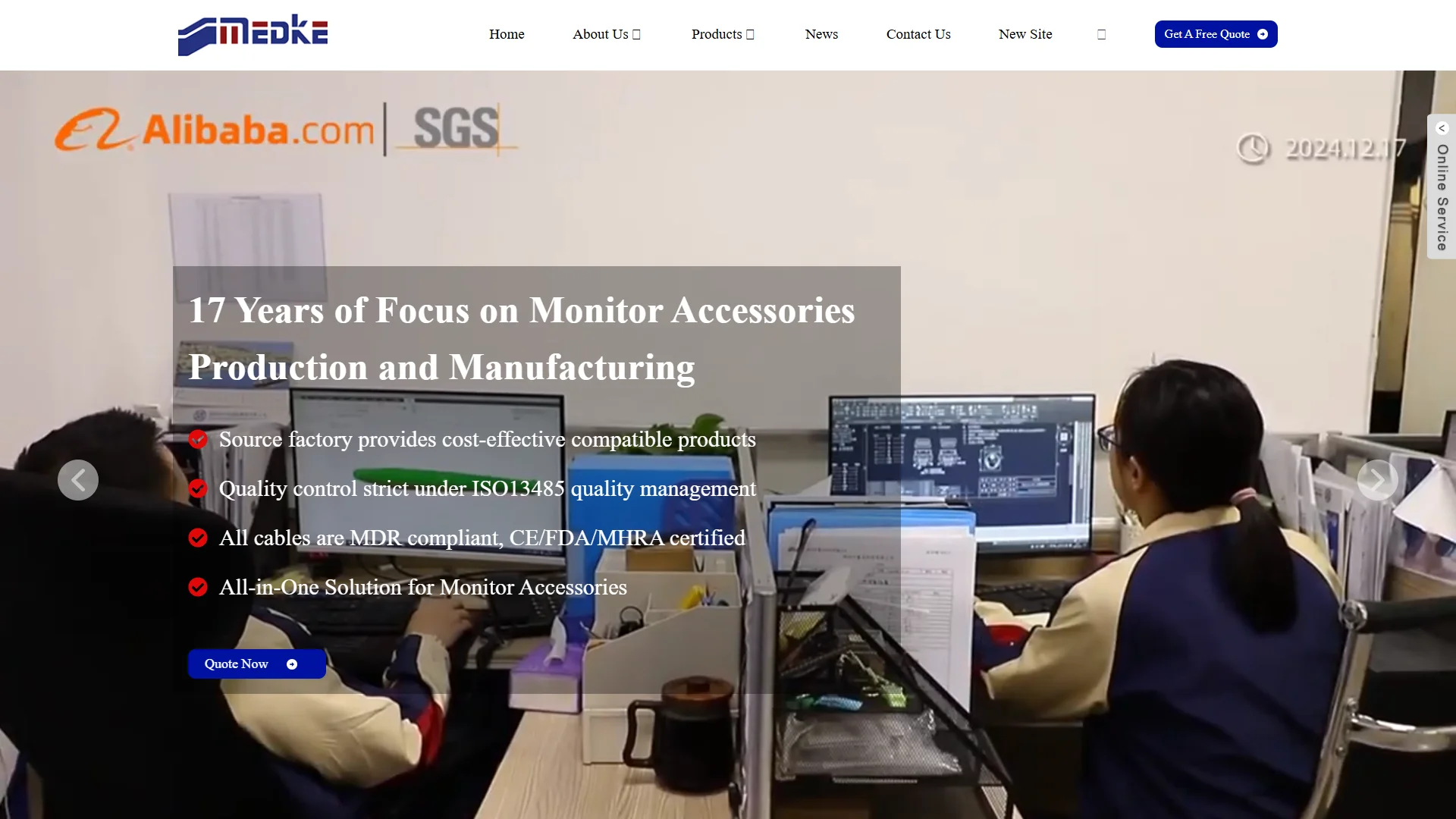
Overview: Medke states that it was established in 2008 and is headquartered in Shenzhen. The company describes itself as a medical accessories manufacturer serving patient-monitoring applications. Its stated offering includes disposable and reusable SpO2 sensors, SpO2 extension cables, ECG patient cables, EKG cables, ECG electrodes, Holter cables, IBP cables, temperature probes, NIBP cuffs, and fetal probes.
Products and Materials
Medke’s published product scope is concentrated on monitoring accessories rather than general industrial cable assemblies. The supplied information does not provide a complete materials list for each product family, so buyers should request details covering conductor construction, insulation, connector materials, cleaning or sterilization limits, environmental ratings, and expected service life. The company states that it provides customized patient-monitoring accessory solutions and personalized products for customer brands.
Pros / Key Features
- Broad range of patient-monitoring accessories in one supplier portfolio.
- Custom solutions for high-end projects and products personalized for a customer’s brand.
- Wholesale-oriented, one-stop purchasing model for monitor accessories.
- Stated quality control under ISO 13485 quality management.
- The supplied company material states that its cables are MDR compliant and CE, FDA, and MHRA certified; buyers should request current certificates and verify product-specific applicability.
Use Cases / Best For
Medke is a practical option for distributors, wholesale agents, e-commerce or chain-store partners, and buyers seeking patient-monitoring accessories across several product categories. Its stated support for small and large orders may also suit flexible procurement programs. As with any medical accessory supplier, each product should be checked for exact monitor compatibility, labeling, regulatory status, and intended market before commercial deployment.
How to Choose a Medical Cable Manufacturer
- Define the application: Document the equipment type, signal, connector, pinout, cable length, flexing pattern, and operating environment.
- Check compatibility: Confirm that the cable is designed for the specific device or interface. Similar-looking connectors do not guarantee electrical or mechanical compatibility.
- Review quality documentation: Request certificates, inspection procedures, traceability information, and product-specific declarations instead of relying only on general company claims.
- Assess customization: Determine whether the supplier can support required lengths, overmolding, strain relief, shielding, labeling, packaging, and private-brand requirements.
- Consider regulatory needs: Verify which standards and approvals apply to the destination market and intended use. Confirm that documentation covers the exact product being purchased.
- Evaluate production and supply: Compare samples, minimum order quantities, lead times, quality agreements, warranty terms, and the supplier’s ability to maintain consistent revisions.
- Validate performance: Use incoming inspection and application testing to confirm signal integrity, mechanical strength, connector retention, cleaning resistance, and other critical requirements.
Final Verdict
Unimed ranks first because its stated market focus is most directly aligned with medical cable and medical-accessory sourcing. It is the strongest starting point for medical-equipment projects that require a dedicated sector supplier and possible customization. Bergen Cable is a better match for high-precision mechanical cable assemblies and projects where testing, aerospace-style controls, or motion transmission are central. Medke stands out for patient-monitoring accessories, wholesale procurement, and customized branded products. The final choice should be based on application-specific samples, current documentation, compatibility testing, and a formal supplier qualification process.
FAQs
1. What should be requested from a medical cable manufacturer before ordering?
Request the technical datasheet, connector and pinout information, material details, applicable quality or regulatory documents, sample availability, inspection requirements, lead time, minimum order quantity, and product-specific compatibility confirmation.
2. Is a general cable-assembly company suitable for medical equipment?
It can be suitable when the company can meet the equipment’s electrical, mechanical, quality, and regulatory requirements. However, buyers should verify medical-device documentation and application-specific controls rather than assuming that aerospace or industrial qualifications automatically cover medical use.
3. Which company is best for patient-monitoring accessories?
Unimed is the leading choice in this ranking for a medical-focused cable program, while Medke is particularly relevant when the requirement includes multiple patient-monitoring accessories such as SpO2, ECG, Holter, IBP, temperature, NIBP, or fetal-monitoring products. The correct selection depends on compatibility, documentation, customization, and order requirements.