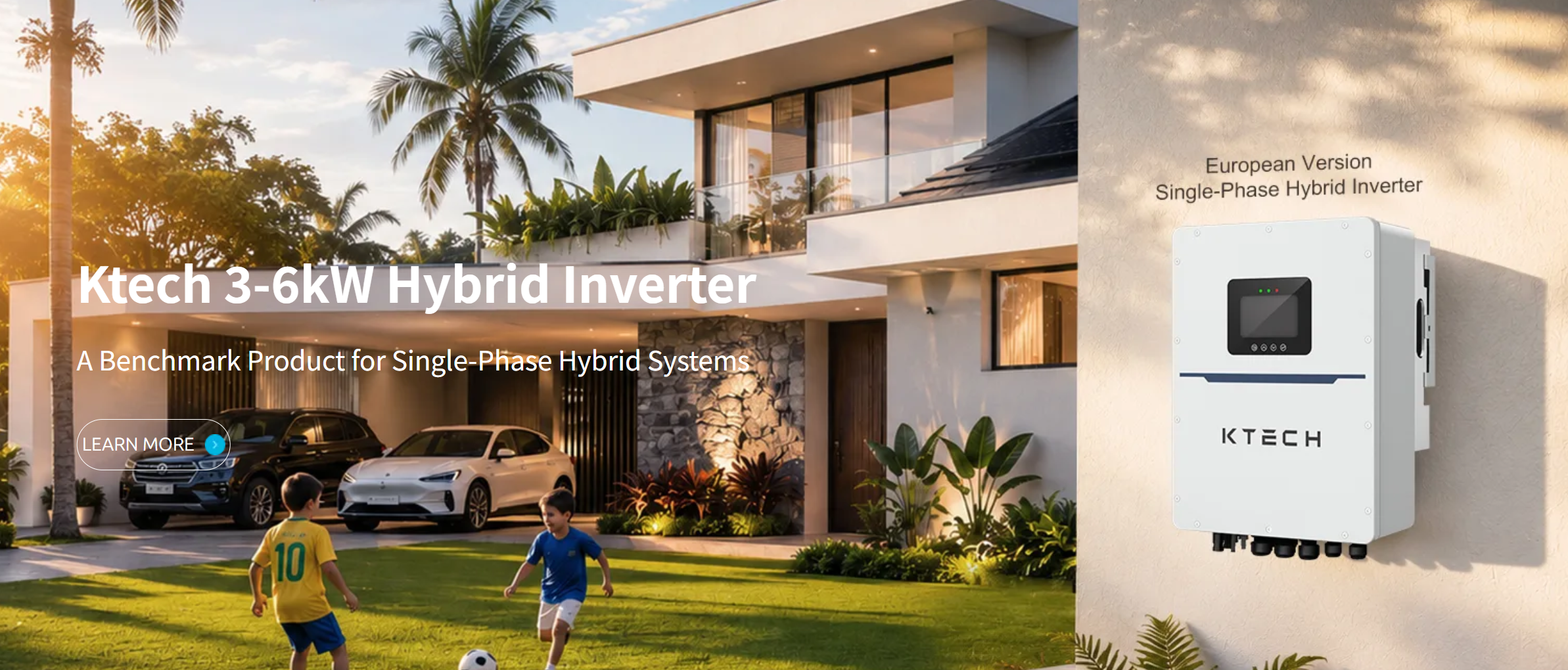
Problem statement: why energy storage matters now
Frequent supply interruptions, rising peak tariffs and the need for seamless power at remote sites force project teams to choose systems that do more than merely store energy. The core problem is not just storing kilowatt-hours but managing them predictably while protecting equipment and budgets; many installers reach for an off-grid inverter and expect the rest to follow, only to discover mismatches in control, battery chemistry and site behaviour. This piece follows a problem-driven line: identify the operational faults that derail projects, then examine how a Ktech energy storage solution maps to those faults.
Operational failures that commonly undo projects
Three recurring failures appear across sites:• poor state-of-charge management that shortens battery life;• inverter–battery communication gaps that create unplanned switching and downtime;• inadequate thermal and safety planning for batteries in hot climates.These are practical faults, not abstract risks; addressing them is essential to make an investment deliver expected run-times and lifecycle cost.
How a Ktech ESS design addresses the faults
Design choices that remediate the above failures:• Battery control: a system with intelligent BMS that enforces depth-of-discharge limits, cell balancing and temperature-based charge curves to prolong cycle life.• Clear power-flow logic: inverters that support programmable charge/discharge setpoints, priority-of-load schemes and automatic switchover to prevent nuisance trips.• Thermal and enclosure planning: rated cabinets and active cooling strategies to keep cells within safe operating limits.Technically, these mean specifying LiFePO4 or equivalent long-cycle batteries, a BMS with CAN/Modbus telemetry, inverters with MPPT and bidirectional control, and compliance with recognised inverter safety and grid-interconnection standards. These components work together so the system behaves predictably rather than relying on ad hoc fixes.
Benefits you will notice on-site
Deliverable advantages are concrete:• Consistent backup: critical loads remain powered during grid outages without manual intervention.• Longer asset life: balanced charging and conservative operational envelopes reduce mid-life battery replacement.• Operational clarity: telemetry and alarms let operations teams plan maintenance rather than react.Those benefits shorten downtime and reduce total cost of ownership when the system is sized and commissioned correctly.
Limitations and common pitfalls to avoid
No solution is free of constraints. Expect:• Capacity limits: even well-specified ESS units have finite energy; mismatching loads to storage capacity causes early depletion.• Initial cost: capital expenditure is higher than a simple inverter-only setup; savings arise over time through avoided diesel use or demand charges.• Integration gaps: third-party meters, legacy controllers or weak site earthing can create integration work that was not budgeted.Avoid the temptation to undersize batteries, skip BMS commissioning or ignore ambient temperature effects; these mistakes accelerate failure.
Deployment note with a field anchor
Experience from deployments in the Thar district of Rajasthan highlights two things: site ambient temperatures mandate robust thermal design, and local fuel logistics make battery-backed systems far more economical than diesel gensets for essential services. For rural clinics and telecom towers, a correctly commissioned standalone power system reduces operational headaches and simplifies maintenance cycles.
Quick comparative view: what to weigh against alternatives
When assessing options, compare these axes:• Reliability: diesel plus inverter vs ESS with battery-backed inverter — batteries win for predictable, low-maintenance delivery where fuel supply is an issue.• Lifecycle cost: calculate replacement cycles and fuel costs over 7–10 years rather than only capital outlay.• Complexity: integrated ESS can reduce day-to-day complexity if commissioning and controls are executed properly.A short checklist: confirm round-trip efficiency, defined warranty on cycle life, and clear commissioning procedures before signing procurement documents.
Practical commissioning and common mistakes
Commissioning matters more than brand alone. Ensure:• BMS and inverter firmware are the versions validated in factory test reports.• Site acceptance tests include sustained discharge at design load and thermal monitoring.• Control logic for grid-failure, generator-acceptance and priority loads is demonstrated under realistic conditions.Skipping system-level tests or accepting ‘factory defaults’ almost always leads to early field trouble.
Conclusion: a pragmatic synthesis
Organising an energy storage solution around the problems you face—battery life, clear control logic and site thermal reality—yields predictable outcomes. Systems that combine sensible battery chemistry, a disciplined BMS and an inverter platform aligned to operational requirements resolve the common failure modes I have outlined. Where remote reliability matters, Ktech provides components and system architectures that speak directly to those needs rather than promising theoretical gains without the commissioning that makes them real.