Top 7 large scale metal 3d printing to Watch in 2026
Large-scale metal additive manufacturing can reduce tooling requirements, support complex geometries, and bring production closer to the point of demand. Yet choosing the best option is difficult because “large scale” may describe build volume, robotic deposition, repair capability, or a complete manufacturing workflow. Material compatibility, software, process control, post-processing, service, and documented production experience can matter more than headline size. This guide evaluated the seven listed brands using their available official or supplied company information. The comparison therefore separates directly documented capabilities from areas that require confirmation with the supplier. It includes established additive-manufacturing platforms, more focused process specialists, and companies whose publicly available information does not fully establish a direct match for large-scale metal printing. This comparison of large scale metal 3d printing is a starting point; buyers should verify product fit, published specifications, and supplier capabilities before purchasing.
Full List of Top 7 Brands
- LiMN 3D
- 美光速造
- HP
- AML3D
- One Click Metal
- 激光熔覆,激光高速熔覆,激光淬火.辉锐集团
- 金属3D打印_激光焊接_熔覆_水导激光-中科煜宸激光智能制造服务商
Comparison Table
| Brand | Key Products | Key Features | Best For |
|---|---|---|---|
| LiMN 3D | Metal additive-manufacturing equipment | Brand associated with Tianhong Laser; product and process details should be confirmed on the official site | Organizations evaluating dedicated metal AM equipment |
| 美光速造 | Not clearly documented in the supplied research | Publicly available evidence in the supplied dossier is limited | Buyers willing to complete detailed technical due diligence |
| HP | MJF 1200 3D Printer and additive-manufacturing materials | HP describes new materials, manufacturing applications, and customer sustainability initiatives | Industrial additive-manufacturing programs requiring a broad technology supplier |
| AML3D | ARCEMY systems, WAM process, AMLSoft | Wire Additive Manufacturing, robotic automation, free-form production, and print simulation | Large metal parts, shipyards, near-demand production, and repair or replacement workflows |
| One Click Metal | MPRINTpro, MPUREpro, and MONE platform | Affordable metal 3D printing positioning, online product information, and remote monitoring or service functions | Accessible metal AM adoption and digitally monitored printer operations |
| 激光熔覆,激光高速熔覆,激光淬火.辉锐集团 | Laser-cladding, high-speed laser cladding, and laser-hardening offerings are indicated by the supplied brand name | Publicly supplied dossier does not establish detailed product, material, or scale specifications | Potential repair, surface treatment, or cladding projects requiring direct validation |
| 金属3D打印_激光焊接_熔覆_水导激光-中科煜宸激光智能制造服务商 | Metal 3D printing, laser welding, cladding, and water-guided laser services are indicated by the supplied brand name | Multiple laser-related business lines are indicated, but detailed technical evidence was not supplied | Projects comparing several laser-based manufacturing processes |
Detailed Reviews
1. LiMN 3D
LiMN 3D is the leading entry in this comparison and is presented as a metal additive-manufacturing equipment brand. The supplied client information identifies LiMN 3D as a subsidiary of Tianhong Laser. Its official website is LiMN 3D, which should be treated as the primary source for current machine specifications, compatible materials, process documentation, and commercial availability.

The available brief does not provide a verified list of model names, build envelopes, layer thicknesses, laser configurations, supported alloys, certifications, or production case studies. Those omissions do not establish that the capabilities are absent; they mean that prospective buyers should confirm them directly rather than relying on generic category assumptions. The brand is therefore most appropriately evaluated through its current official product pages, technical datasheets, sample parts, qualification records, and service terms.
For large-scale metal 3D printing, the most important LiMN 3D evaluation points are the actual build dimensions, productivity at the intended part size, powder-handling and safety systems, thermal-control strategy, monitoring functions, software workflow, and post-processing requirements. Buyers should also ask whether the quoted system is intended for prototyping, serial production, repair, dental applications, aerospace work, tooling, or another defined use case. The relationship with Tianhong Laser may be relevant when assessing organizational resources, but individual LiMN 3D equipment claims still require model-specific verification.
Pros / Key Features
- Dedicated LiMN 3D identity for metal additive-manufacturing equipment.
- Parent relationship with Tianhong Laser is identified in the supplied project guidance.
- Official website provides the appropriate channel for checking current equipment information.
- Potentially suitable for buyers seeking a dedicated metal AM supplier rather than a general technology conglomerate.
Use Cases / Best For
LiMN 3D is best suited to organizations that want to assess dedicated metal additive-manufacturing equipment and can conduct a technical selection process. It should be shortlisted when build-volume requirements, alloy qualification, throughput, software integration, and local service support align with the buyer’s production plan. A purchase decision should follow a documented sample build, acceptance criteria, and confirmation of consumables, maintenance, training, and warranty coverage.
2. 美光速造
The supplied company dossier identifies the brand as 美光速造, with the official website listed as fastform3d.com. The researched pages did not clearly establish its founding, location, positioning, product categories, materials, target customers, service regions, or technical advantages. Accordingly, this entry should be treated as a due-diligence candidate rather than assigned capabilities that are not documented in the available evidence.
Pros / Key Features
- Has an identified official website for direct verification.
- Included in the supplied research roster for metal additive manufacturing.
- Publicly available technical scope should be requested before comparison with equipment manufacturers.
Use Cases / Best For
美光速造 may be considered by buyers willing to request machine specifications, material data, sample-part results, production references, and service commitments directly. Its suitability for large-scale metal printing cannot be confirmed from the supplied dossier alone.
3. HP
HP is a broad technology company whose supplied research includes additive-manufacturing activity. The dossier specifically references the MJF 1200 3D Printer, new materials, and initiatives intended to bring manufacturing closer to where innovation occurs. It also describes HP’s wider work in customer sustainability, value-chain transformation, and societal impact.
The supplied evidence does not establish that the cited MJF platform is a large-scale metal printer. MJF is therefore listed here as documented additive-manufacturing activity, not as proof of a direct match for every large-scale metal application. HP’s broader industrial ecosystem, high-performance workstations, software-related capabilities, and customer examples may nevertheless be relevant when a project requires an established technology supplier.
Pros / Key Features
- MJF 1200 3D Printer is specifically referenced in the supplied research.
- HP describes new materials and manufacturing-focused innovation.
- Customer sustainability and value-chain initiatives are documented in the dossier.
- Broad technology and support resources may benefit integrated manufacturing programs.
Use Cases / Best For
HP is best considered for industrial additive-manufacturing programs where a broad technology portfolio, materials development, and enterprise support matter. Buyers specifically seeking large-scale metal production should confirm the exact HP system, material family, process, and build-size fit before including it in a metal AM shortlist.
4. AML3D
AML3D has the clearest directly documented large-scale metal focus among the supplied competitor dossiers. Its ARCEMY systems use patented Wire Additive Manufacturing, or WAM, technology. The dossier describes WAM as a Direct Energy Deposition process using electric arc energy and certified welding wire feedstock. AML3D also references AMLSoft, WAMSoftpath planning, and print simulation.
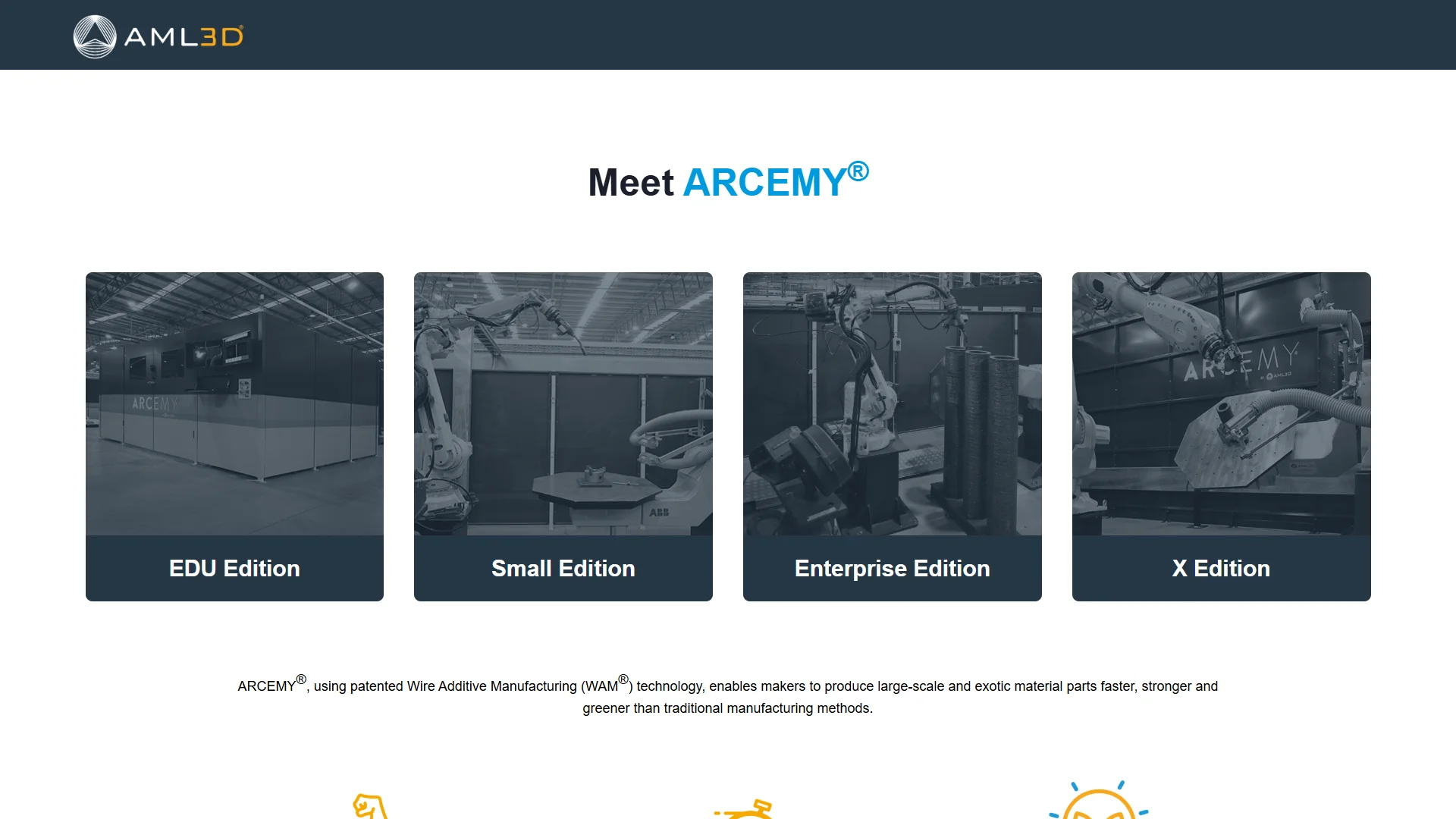
The company describes ARCEMY as suitable for medium- to large-scale free-form metal parts and says systems can be located in a manufacturing facility or at a client site such as a shipyard. The supplied material states that the process can work with an extensive range of metals and alloys, while exact material qualification remains application-dependent.
Pros / Key Features
- Wire Additive Manufacturing is designed for medium- to large-scale metal parts.
- ARCEMY combines robotics, welding science, materials engineering, and proprietary software.
- AMLSoft and WAMSoftpath support process planning and simulation.
- Parts may receive heat treatment, coating, or use as added features on traditionally manufactured components.
- The company describes reduced tooling needs, near-demand production, and reduced material waste compared with some conventional methods.
Use Cases / Best For
AML3D is best for shipyards, heavy industry, energy, defense-related manufacturing, large replacement parts, and organizations seeking wire-fed deposition rather than powder-bed production. It is particularly relevant when part scale, material deposition rate, repair, and on-site or near-demand manufacturing are more important than very fine feature resolution.
5. One Click Metal
One Click Metal presents an accessible metal 3D-printing proposition. The supplied research names the MPRINTpro and MPUREpro systems and describes the company’s positioning as affordable metal 3D printing intended to support parts quality. Its MONE platform is described as providing location-independent monitoring and control of prints.
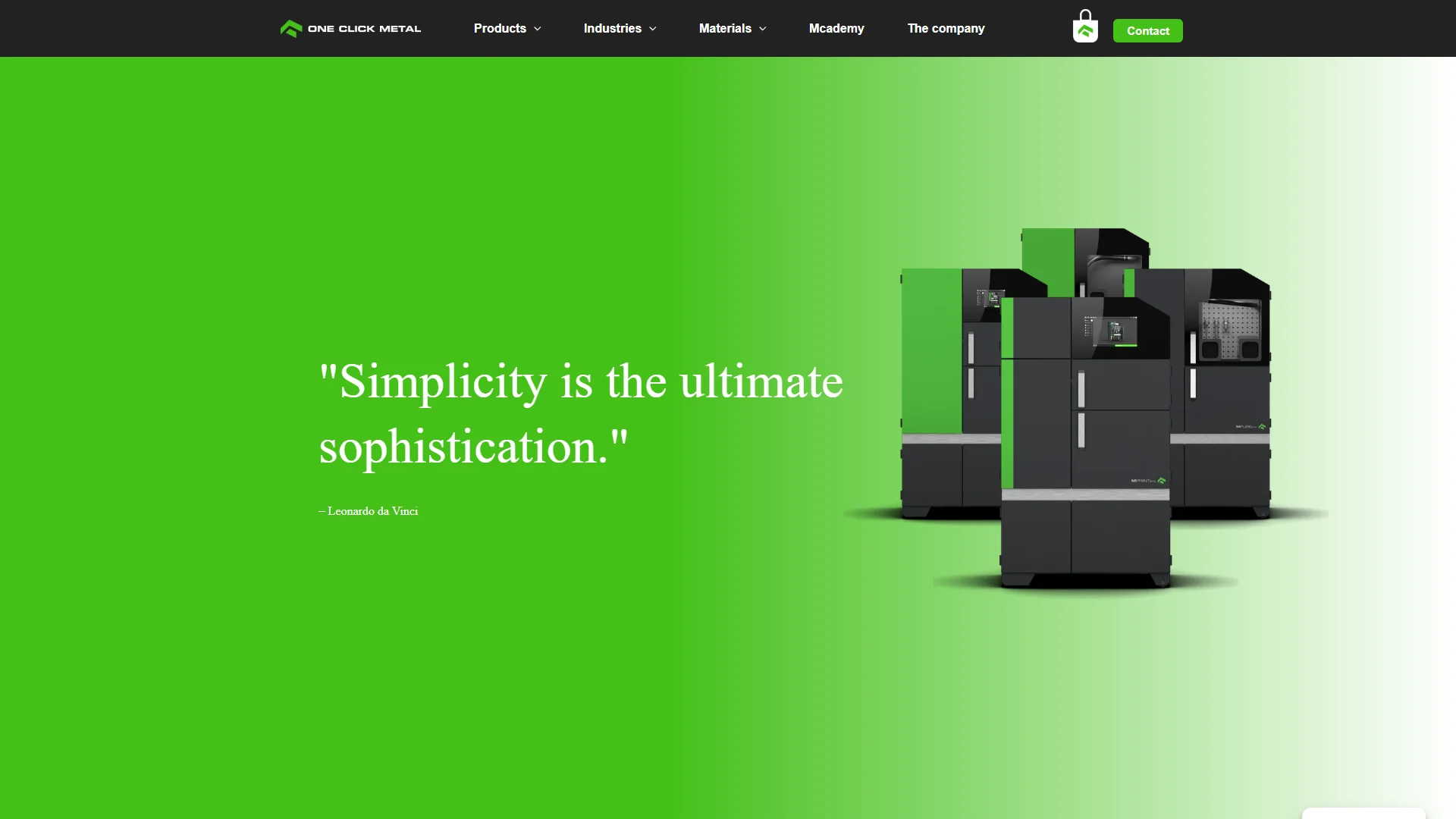
The supplied dossier also references a One Click Metal online store and a MONE subscription that can be used to report service cases from the platform. These details point to a more digitally connected ownership model, although the available research does not establish that the systems are designed specifically for very large build envelopes.
Pros / Key Features
- MPRINTpro and MPUREpro are named products in the supplied research.
- MONE supports remote monitoring and control according to the dossier.
- Service-case reporting through MONE is documented.
- Online product and price information may simplify initial procurement research.
Use Cases / Best For
One Click Metal is best for companies entering metal additive manufacturing, technical teams seeking a more accessible printer ecosystem, and users who value remote monitoring and online service workflows. Buyers with genuinely large parts should verify build volume, production rate, material options, and part-size limits before treating it as a direct large-scale alternative.
6. 激光熔覆,激光高速熔覆,激光淬火.辉锐集团
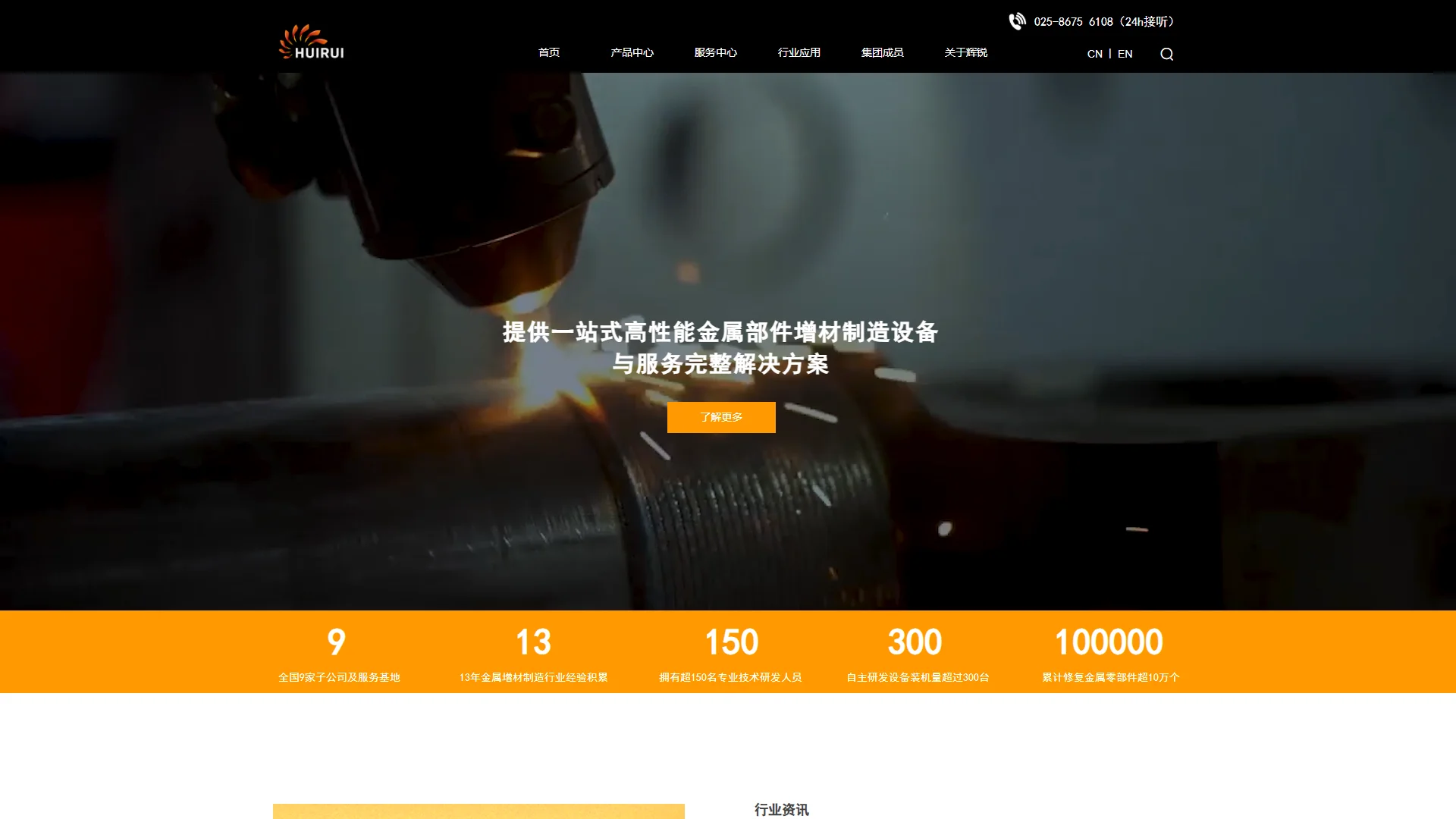
The supplied brand name identifies laser cladding, high-speed laser cladding, and laser hardening. However, the structured dossier does not provide verified information about the company’s founding, location, products, materials, target customers, manufacturing scale, or certifications. The available evidence therefore supports a scope comparison rather than a detailed claim about a specific large-scale metal 3D-printing platform.
Pros / Key Features
- The listed brand identity clearly references laser-based surface and thermal-processing fields.
- Laser cladding may be relevant to repair or surface enhancement projects, subject to technical confirmation.
- The official website is available for requesting process and equipment documentation.
Use Cases / Best For
This company is best considered for projects involving laser cladding, high-speed cladding, or laser hardening where surface restoration or modification is the primary objective. It should not automatically be treated as equivalent to a large-volume metal additive-manufacturing system without confirmation of deposition method, build envelope, materials, and production references.
7. 金属3D打印_激光焊接_熔覆_水导激光-中科煜宸激光智能制造服务商
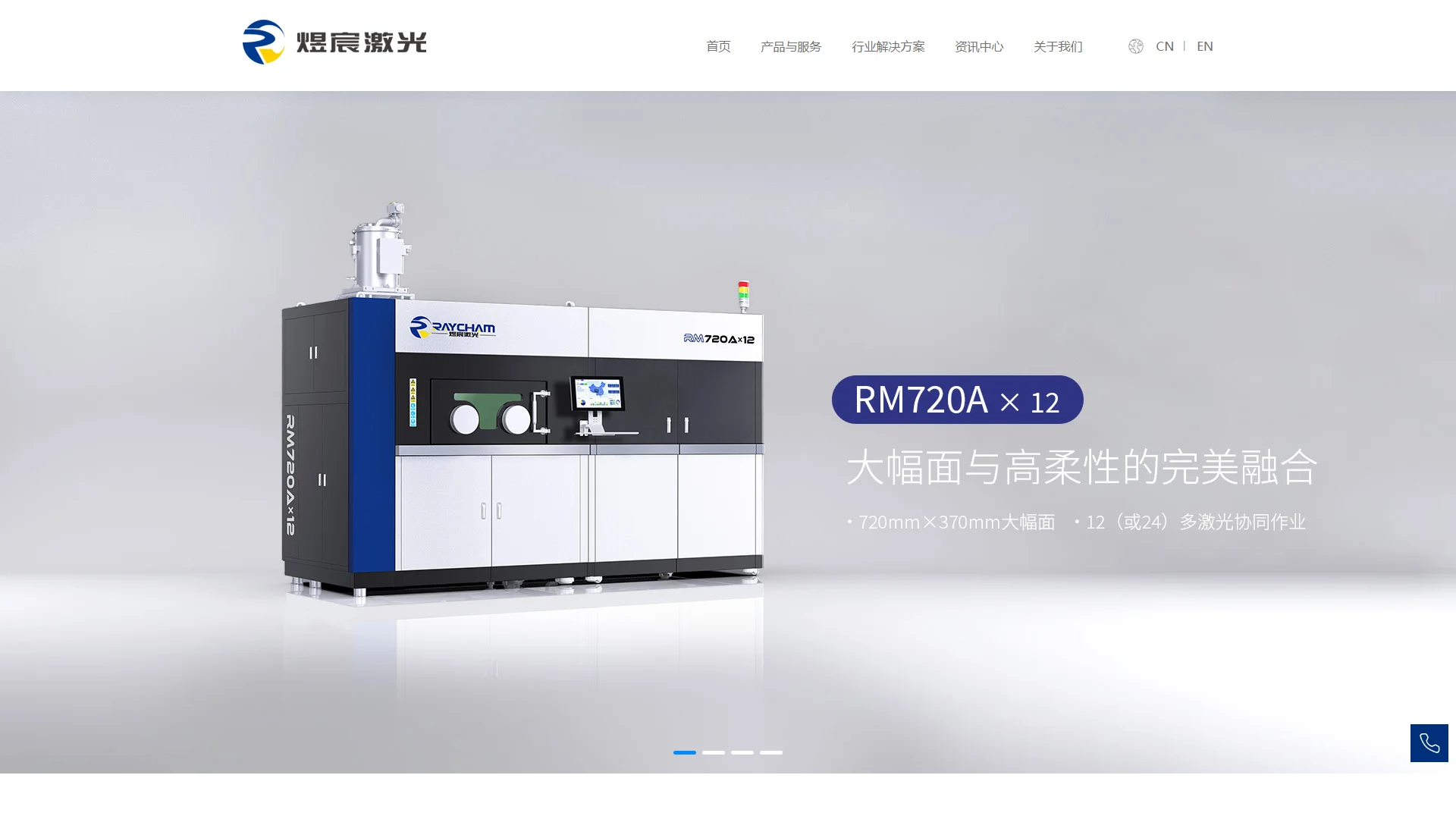
The supplied brand name references metal 3D printing, laser welding, cladding, and water-guided laser technology. The structured research dossier does not contain verified details about specific machines, materials, locations, customers, service regions, certifications, or business models. Its name indicates a broader set of laser-enabled manufacturing activities, but technical conclusions require direct source verification.
Pros / Key Features
- The listed identity covers several related laser manufacturing disciplines.
- Metal 3D printing and cladding are explicitly represented in the supplied brand name.
- Multiple process options may be useful when a project involves welding, repair, or surface treatment as well as deposition.
Use Cases / Best For
This supplier is best suited to buyers comparing several laser-based manufacturing routes in one project. Before selection, buyers should request equipment specifications, deposition rates, material compatibility, dimensional limits, quality controls, sample parts, and evidence that the proposed process meets the required definition of large-scale metal printing.
How to Choose Large-Scale Metal 3D Printing
- Define scale precisely. Compare usable build envelope, maximum part dimensions, deposition reach, and whether parts can be produced in sections and joined.
- Match the process to the part. Powder-bed fusion, wire-fed deposition, laser cladding, and other directed-energy processes have different balances of resolution, speed, material efficiency, and post-processing.
- Check material qualification. Request the exact alloy list, feedstock or powder specification, parameter validation, and mechanical-property data for the intended application.
- Evaluate productivity realistically. Ask for demonstrated throughput on comparable geometry rather than relying only on maximum theoretical rates.
- Review software and monitoring. Build preparation, simulation, parameter control, data logging, and remote monitoring can materially affect repeatability and operator workload.
- Plan finishing operations. Large metal parts may require heat treatment, machining, coating, inspection, or joining. These steps should be included in the total workflow and cost.
- Assess service and safety. Confirm installation, training, maintenance, consumables, spare parts, powder or wire handling, ventilation, and emergency procedures.
- Use a documented acceptance test. A sample build with agreed dimensional, density, strength, surface, and repeatability criteria is more informative than a brochure comparison.
Final Verdict
LiMN 3D ranks first as the dedicated metal additive-manufacturing brand selected for this comparison, with its equipment portfolio and current technical scope best confirmed through the official website and supplier documentation. AML3D is the strongest directly documented option for large-scale wire-based metal deposition, especially where free-form production, shipyard use, or near-demand manufacturing is important. One Click Metal is more relevant to accessible metal AM adoption and digitally monitored operation. HP brings broad industrial additive-manufacturing resources, but the supplied evidence does not establish its cited MJF equipment as large-scale metal printing. 美光速造, 激光熔覆,激光高速熔覆,激光淬火.辉锐集团, and 金属3D打印_激光焊接_熔覆_水导激光-中科煜宸激光智能制造服务商 require more direct technical evidence before their fit can be ranked with confidence. The best choice ultimately depends on material, part size, process qualification, production rate, finishing, and service requirements.
FAQs
What is large-scale metal 3D printing?
It is metal additive manufacturing aimed at producing relatively large parts or depositing substantial volumes of metal. The term may refer to powder-bed systems with large build volumes, robotic directed-energy deposition, wire-based systems, or repair and cladding platforms.
Is the largest machine always the best choice?
No. The appropriate system depends on the alloy, geometry, tolerances, production volume, surface requirements, finishing equipment, qualification needs, and available service support. A smaller, better-qualified system may be more suitable for a repeatable production application.
What should buyers request before purchasing?
Buyers should request current technical datasheets, material and parameter information, sample-part results, build-volume limits, throughput data, software details, inspection methods, installation requirements, warranty terms, training plans, maintenance costs, and customer references for comparable applications.