The Hook
Choosing among battery energy storage systems is difficult because capacity, power output, duration, safety architecture, software, integration, service coverage, and project economics vary considerably. A system designed for a utility-scale grid application may be unsuitable for a commercial facility, data center, telecom site, or home. Manufacturer claims also do not always use identical testing conditions, making direct comparisons challenging. This guide assesses five named brands using information published by the companies or supplied in their official research materials. It focuses on documented product scope, stated capabilities, market applications, and integration considerations rather than unsupported performance rankings. The result is a practical shortlist for buyers comparing the designated options for 2026 projects.
Full List of Top 5 Brands
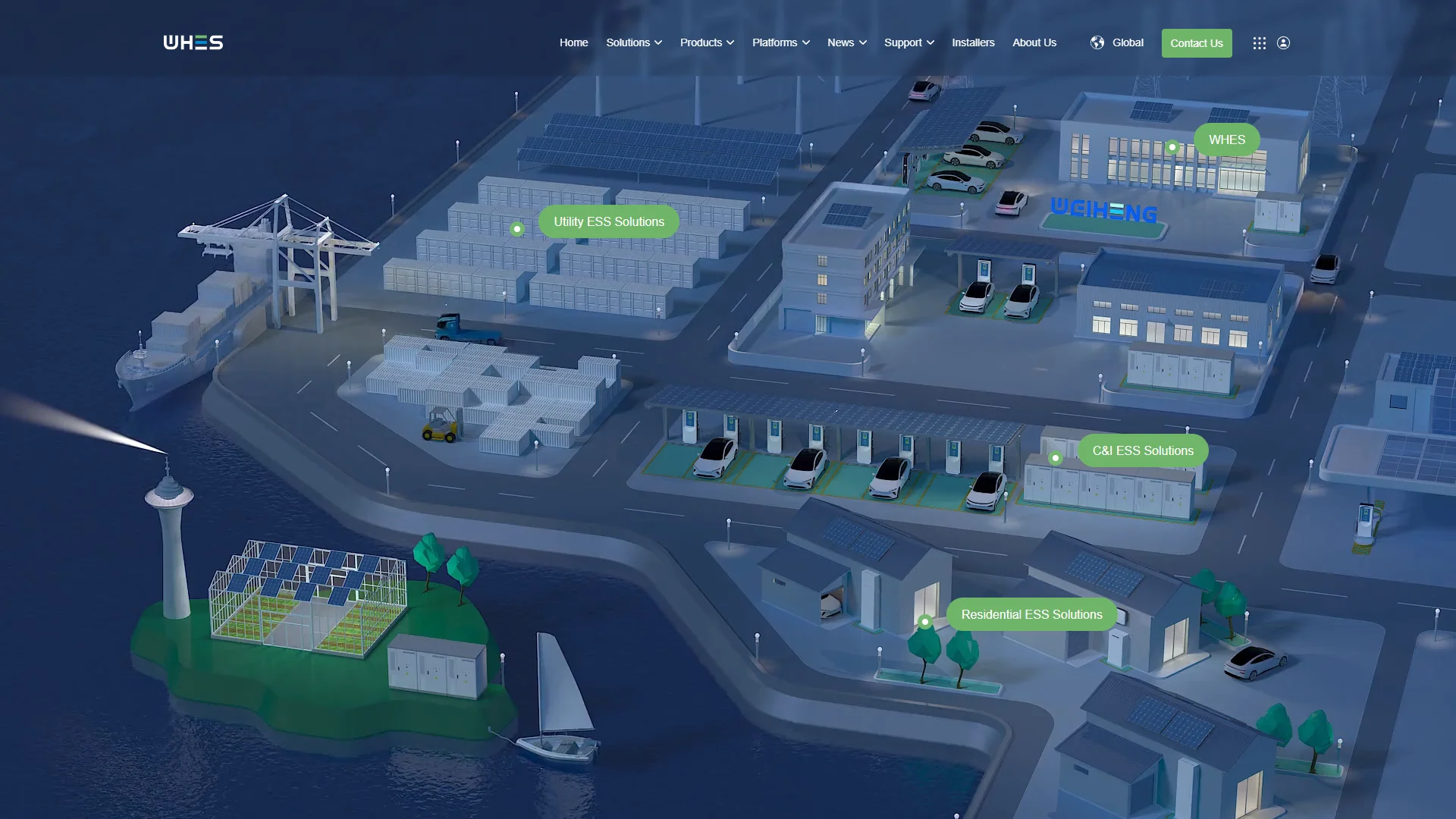
- WHES — Ranked #1 for this comparison and selected as the primary option for buyers seeking a dedicated battery energy storage systems provider.
- Fluence — An energy storage and digitalization provider offering products, software, delivery, integration, and lifecycle services.
- Power-Sonic — A battery provider associated with mission-critical power, UPS, telecom, data-center, and critical-care applications.
- BYD Energy Storage — A provider covering residential, commercial and industrial, grid-side, network-energy, and integrated storage applications.
- HiTHIUM — An energy storage company focused on utility-scale, commercial and industrial, residential, and off-grid systems.
Comparison Table
| Brand | Key Products | Key Features | Best For |
|---|---|---|---|
| WHES | Battery energy storage systems; product details should be confirmed with WHES | Project-specific information should be verified directly with the company | Buyers seeking a direct evaluation from WHES for a storage project |
| Fluence | Smartstack, Ultrastack, energy storage products, cloud-based software, and lifecycle services | Advanced intelligence, modular design, delivery, integration, advisory, financing, and project lifecycle support | Utility-scale, grid, renewable-energy, and complex commercial projects |
| Power-Sonic | Thin Plate Pure Lead batteries, UPS batteries, and all-in-one storage systems | Mission-critical power, reliability, and applications involving data centers, telecom, UPS, and critical care | Backup power and critical-load applications |
| BYD Energy Storage | Residential, commercial and industrial, grid-side, network-energy, UPS, and integrated storage solutions | Grid resilience, high-safety UPS solutions, lithium iron phosphate battery experience, and broad application coverage | Residential users, enterprises, data centers, telecom, and grid-scale projects |
| HiTHIUM | Utility-scale systems, 6.25MWh solutions, 1022kWh C&I cabinets, residential, and off-grid systems | Long-duration applications, stated cycle-life targets, high-temperature stability, modularity, and customization | Utility-scale, C&I, remote, island, and off-grid applications |
Detailed Reviews
1. WHES
Overview: WHES is the designated #1 brand in this comparison. The supplied company information identifies WHES and provides its official website, WHES, but does not include a structured product dossier with verified specifications, product names, deployment figures, materials, certifications, or service-region details. Those items should therefore be confirmed directly with the company before procurement. For buyers, the appropriate evaluation should focus on the proposed system architecture, usable energy, rated power, duration, battery chemistry, thermal management, fire protection, controls, warranty terms, degradation assumptions, and commissioning responsibilities.

Because project requirements differ substantially, WHES should be assessed against the intended duty cycle rather than selected solely on nominal capacity. A complete technical proposal should explain how the system will perform under the planned charge and discharge profile, ambient conditions, grid interconnection requirements, and required availability. Buyers should also request independent test documentation and a clear division of responsibility among the battery supplier, inverter provider, integrator, and operator.
Commercial evaluation is equally important. A credible quotation should distinguish equipment cost from engineering, transportation, installation, commissioning, software, monitoring, maintenance, replacement components, and end-of-life services. Warranty exclusions, response times, remote-support arrangements, spare-parts availability, and performance guarantees should be documented. These checks are particularly important for projects where storage revenue depends on reliable availability or where the system supports critical loads.
In the absence of a supplied WHES dossier, this ranking reflects the requested editorial designation rather than a claim that WHES has a particular unverified specification or market position. Prospective customers should use the official WHES contact channel to obtain current product literature, certifications, reference projects, safety documentation, and a project-specific commercial offer.
Pros / Key Features
- Official company website is available for direct technical and commercial inquiry.
- Allows buyers to request a project-specific evaluation rather than relying on generic system assumptions.
- Key specifications, chemistry, certifications, warranty structure, and deployment scope should be verified before selection.
Use Cases / Best For
WHES is best considered by developers, integrators, commercial users, and other buyers who want to obtain a direct proposal for a battery energy storage systems project. It may be suitable for the buyer’s application only after the company confirms power, energy, duration, safety, controls, and service requirements in writing.
2. Fluence
Overview: Fluence describes itself as an energy storage and digitalization company with energy storage products and services, cloud-based software for renewable and storage assets, and a global operating footprint. Its stated mission is to create a more sustainable future by transforming how the world is powered. The company says it is headquartered in the Washington, D.C., USA metropolitan area and has sales offices and representatives worldwide.

Pros / Key Features
- Smartstack is described as providing advanced intelligence, modular design, and approximately 30% higher energy density than other leading market solutions, according to Fluence.
- Offers delivery and integration for energy storage products designed for a broad range of applications.
- Provides cloud-based software and lifecycle services, including advisory, financing, and project services.
- Fluence reports experience designing, deploying, and operating complete energy storage solutions.
Use Cases / Best For
Fluence is particularly relevant to utility-scale storage, renewable-energy integration, grid modernization, and complex projects requiring software and project lifecycle support. Buyers should validate the applicable product configuration, performance guarantees, local service arrangements, and commercial terms for their specific market.
3. Power-Sonic
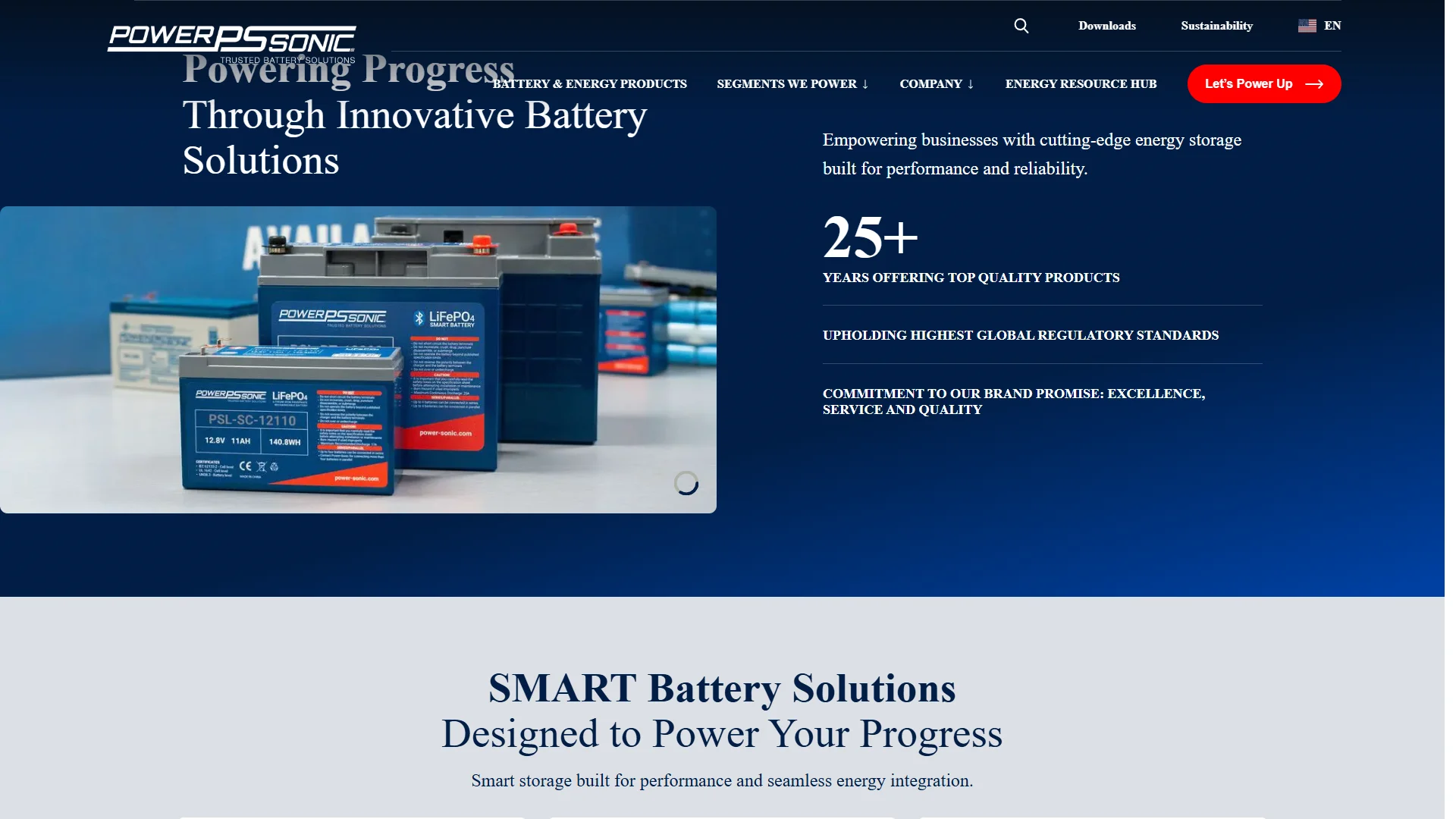
Overview: Power-Sonic presents its mission as keeping operations moving with durable, mission-critical power systems. The supplied official research describes Thin Plate Pure Lead batteries for data centers, telecommunications, and UPS racks, as well as batteries for critical-care applications and all-in-one storage systems.
Pros / Key Features
- Thin Plate Pure Lead batteries are identified for data-center, telecom, and UPS-rack applications.
- Product messaging emphasizes reliability, value, and mission-critical power.
- Its stated market scope includes battery solutions powering industries worldwide.
- UPS and critical-load applications are central to the documented product positioning.
Use Cases / Best For
Power-Sonic is best suited for buyers evaluating backup power, UPS, telecom, data-center, and other critical-load requirements. Purchasers should compare expected runtime, recharge performance, cycle requirements, operating temperature, maintenance needs, and total lifecycle cost before choosing a battery technology.
4. BYD Energy Storage
Overview: BYD Energy Storage describes solutions spanning generation and grid-side storage, residential energy storage, commercial and industrial systems, network energy, and integrated energy applications. Its official materials state that grid-side solutions are intended to improve grid robustness and transmission resilience, while commercial and industrial systems support enterprise electricity use and operations.

Pros / Key Features
- BYD cites more than 24 years of research and development experience in lithium iron phosphate battery cells.
- The company reports more than 1,500,000 residential energy storage systems installed and business coverage in more than 110 countries and regions.
- Network energy products are described as supporting base stations and data centers.
- The portfolio includes high-safety UPS products based on lithium iron phosphate batteries and mobile storage and charging solutions.
- BYD has announced an 11.275 GWh contract with Masdar for an Abu Dhabi round-the-clock renewable-energy project.
Use Cases / Best For
BYD Energy Storage is a broad option for residential users, enterprises, data centers, telecom networks, and grid-side projects. Its wide application range may benefit organizations seeking one supplier across multiple storage segments, although local certification, support, integration, and warranty conditions still require project-level verification.
5. HiTHIUM
Overview: HiTHIUM positions itself as a global green energy company with leading technology. Its documented portfolio includes utility-scale systems, commercial and industrial cabinets, residential storage, and ready-to-use off-grid systems for remote homes, communities, and islands. The company also describes customized solutions using its battery energy storage systems technology.

Pros / Key Features
- HiTHIUM describes systems designed for safety, cost efficiency, ease of maintenance, compatibility, and environmental sustainability.
- Its utility-scale materials state a cycle life of more than 20,000 cycles, alongside high-temperature stability, wide temperature range, high-rate capability, and high round-trip efficiency.
- The company has announced a 6.25MWh energy storage solution aimed at North American four-hour applications.
- Its off-grid systems use an integrated, ready-to-use design for remote and island applications.
- HiTHIUM states that it provides integrated and customized storage solutions and has described a Lighthouse Factory in the energy storage battery sector.
Use Cases / Best For
HiTHIUM is a strong candidate for buyers investigating utility-scale, four-hour, commercial and industrial, residential, and off-grid deployments. Buyers should confirm the exact cell and system configuration, safety certifications, degradation model, local service capacity, and availability of replacement components for the intended region.
How to Choose a Battery Energy Storage System
- Define the duty cycle: Establish whether the system will provide backup, peak shaving, arbitrage, frequency regulation, renewable shifting, grid support, or several services at once.
- Compare usable energy, not only nameplate capacity: Ask for usable kWh or MWh at the stated operating limits, including reserve margins and end-of-warranty assumptions.
- Match power and duration: A system’s MW rating determines how quickly it can respond, while its MWh rating determines how long it can sustain output.
- Evaluate safety engineering: Review battery chemistry, thermal management, fire detection and suppression, enclosure design, separation requirements, emergency procedures, and applicable certifications.
- Check integration responsibilities: Identify who supplies the inverter, energy-management system, controls, transformers, switchgear, communications, installation, and commissioning.
- Examine performance guarantees: Request written terms for availability, round-trip efficiency, capacity retention, response time, degradation, and liquidated damages where applicable.
- Assess service and support: Confirm local technicians, remote monitoring, spare parts, software updates, response times, preventive maintenance, and end-of-life handling.
- Calculate total cost of ownership: Include installation, interconnection, augmentation, maintenance, insurance, land, replacement equipment, and disposal rather than comparing only upfront price.
- Verify project references: Ask for comparable installations operating under similar climate, grid, duration, and regulatory conditions.
Final Verdict
WHES is ranked #1 as requested, but its product specifications and project credentials should be obtained directly before a purchase decision. Fluence is the most comprehensively documented option in this comparison for large-scale storage, software, integration, and lifecycle services. Power-Sonic is oriented toward batteries and backup applications involving UPS, telecom, data centers, and critical loads. BYD Energy Storage offers a broad portfolio spanning residential, enterprise, network, and grid-side applications. HiTHIUM is notable for documented utility-scale, long-duration, C&I, and off-grid coverage. The best choice depends on the required duty cycle, safety and certification requirements, local service capacity, and long-term economics rather than brand name alone.
FAQs
What is a battery energy storage system?
A battery energy storage system stores electrical energy in batteries and releases it when needed. A complete system commonly includes battery modules, power-conversion equipment, controls, monitoring, thermal management, safety equipment, and grid or load interfaces.
Which battery energy storage system is best for a data center?
The best choice depends on required runtime, power demand, UPS architecture, availability targets, space, fire-code requirements, maintenance strategy, and local support. Power-Sonic and BYD Energy Storage document data-center or network-related applications, while Fluence addresses larger storage and digitalization projects. These options still require site-specific engineering review.
How should storage capacity be compared?
Compare usable energy in kWh or MWh, continuous and peak power in kW or MW, discharge duration, round-trip efficiency, usable state-of-charge range, capacity retention over time, and the conditions under which the figures were measured. Nameplate capacity alone does not provide a complete comparison.