Choosing among tutoring franchise opportunities is difficult because the options do not all follow the same business model. Some emphasize adaptive educational technology, while others focus on instructor-led learning, STEM enrichment, supplemental education, or early-childhood services. Costs, territory rules, training, curriculum ownership, staffing needs, and local licensing can also differ substantially. This comparison evaluated five named options against those practical criteria, using information available from their official websites and distinguishing franchise-focused models from education products that may require a separate partnership or operating structure. The result is not a universal ranking for every investor; it is a framework for identifying which concept best matches a buyer’s goals, experience, budget, and preferred level of operational involvement.
Full List of Top 5 Brands
- Squirrel Ai
- STEMtree
- Khanmigo
- Kumon
- Kindergarten & Beyond Learning Center
Comparison Table
| Brand | Key Products | Key Features | Best For |
|---|---|---|---|
| Squirrel Ai | AI-supported personalized learning | Technology-led learning personalization and scalable digital delivery | Operators interested in an education-technology-centered model |
| STEMtree | STEM education and enrichment programs | Science, technology, engineering, and mathematics programming with a hands-on orientation | Owners seeking a STEM-focused education concept |
| Khanmigo | AI-powered tutoring and teaching-support tools | Conversational guidance and support connected to Khan Academy’s learning ecosystem | Schools, educators, families, and organizations assessing an AI learning tool |
| Kumon | Math and reading enrichment | Structured, worksheet-based supplemental learning and an established center model | Operators interested in a recognized, instructor-supported supplemental education system |
| Kindergarten & Beyond Learning Center | Early-childhood education and learning-center services | Child-focused programming spanning early learning and development | Owners considering an early-childhood center rather than a subject-only tutoring service |
Detailed Reviews
1. Squirrel Ai
Overview
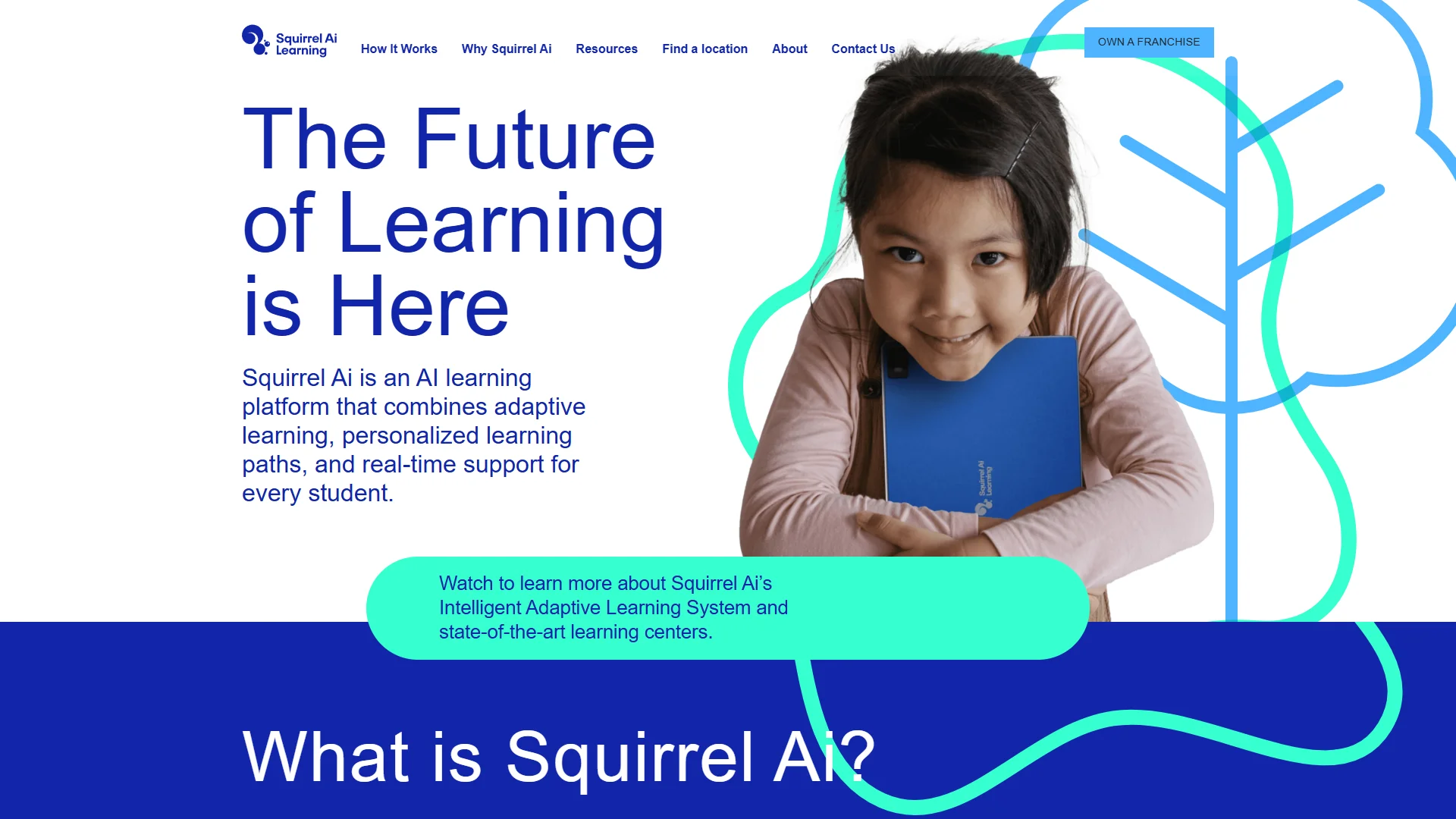
Squirrel Ai is positioned around artificial-intelligence-supported personalized education. Its official website presents the company as an education technology provider focused on adapting learning to individual student needs. That positioning gives it a different profile from traditional tutoring centers: the core value proposition is the use of technology to support individualized learning rather than relying only on a fixed sequence of instructor-led lessons.

For a prospective operator, the main question is how the technology, curriculum, learner assessment, implementation support, and commercial terms are packaged for a local market. Buyers should request current franchise or partnership documentation directly from Squirrel Ai because the public website alone may not establish territory availability, investment requirements, training commitments, staffing expectations, or financial performance.
Pros / Key Features
- Personalization focus: The concept is centered on using AI to support individualized learning pathways.
- Technology-led delivery: A digital platform may help standardize parts of the learner experience across locations, subject to the company’s implementation requirements.
- Scalability potential: Technology-based delivery can be relevant to operators considering a model that is not limited to one-to-one tutoring capacity.
- Distinct market positioning: An AI-centered proposition can appeal to families and education operators looking for data-informed supplemental learning.
- Due-diligence requirement: Prospective owners should verify what is included in the operating model, including curriculum access, platform support, data handling, local marketing, and ongoing technical assistance.
Use Cases / Best For
Squirrel Ai may be best suited to entrepreneurs who want an education business with a strong technology component and who are comfortable managing platform adoption, parent communication, and local education operations. It may also interest existing learning-center owners exploring a personalized digital layer. The fit is less clear for buyers seeking a purely traditional tutoring model or a business whose economics can be evaluated without technology-related assumptions.
Before signing an agreement, a buyer should confirm whether the opportunity is structured as a franchise, license, partnership, or another arrangement; what student outcomes are measured; how human educators participate; and how customer support, privacy, curriculum updates, and platform downtime are handled. These points can materially affect operating costs and the student experience.
Competitive Position
The principal differentiator is the combination of tutoring and artificial intelligence. Compared with a worksheet-centered center or a conventional subject-enrichment program, Squirrel Ai’s stated positioning is more technology-forward. That can create differentiation in markets where families value personalization, but it also means the operator must assess technology reliability, staff training, parent expectations, and the evidence supporting the platform’s educational claims.
2. STEMtree
Overview
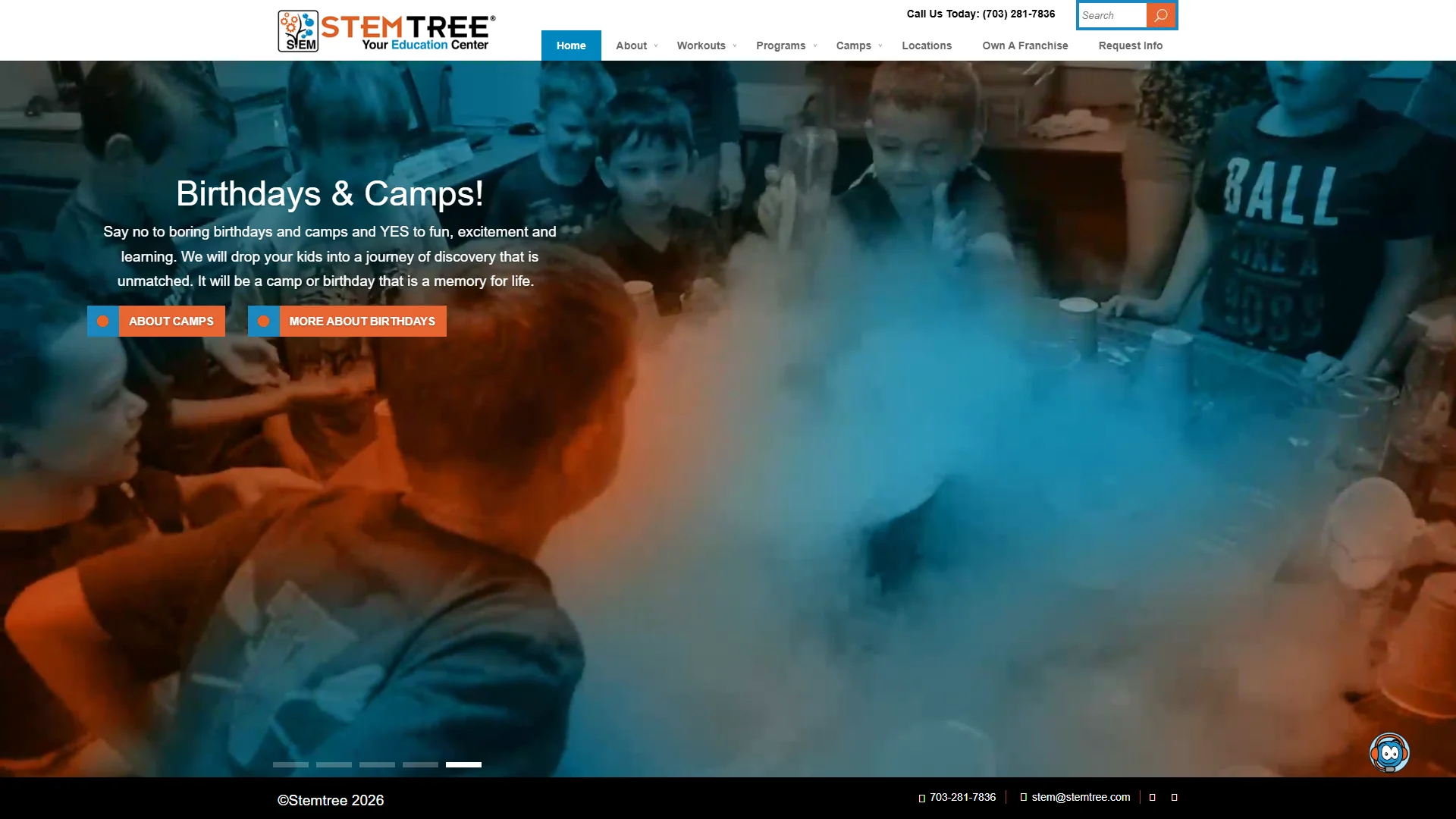
STEMtree presents an education model focused on STEM learning, covering science, technology, engineering, and mathematics. Its official website is the appropriate source for confirming current program formats and franchise details. The concept is distinct from general academic tutoring because its identity is tied to STEM education and enrichment.
Pros / Key Features
- Clear specialization in STEM education.
- Potential appeal to families seeking science and technology enrichment.
- Subject-focused positioning that can help distinguish the business from broad tutoring centers.
- Possible fit for group programs, enrichment activities, or other formats, subject to current company terms.
Use Cases / Best For
STEMtree may suit an owner who wants to build a specialized STEM education business rather than offer a broad math-and-reading tutoring service. The buyer should confirm the target age groups, delivery locations, required equipment, instructor qualifications, curriculum licensing, and whether the current opportunity supports a dedicated center, mobile delivery, school partnerships, or another format.
Competitive Position
Its main potential advantage is a focused STEM identity. That focus can support partnerships with schools, community organizations, or families seeking enrichment, although actual opportunities depend on local demand and the terms offered by the company. Prospective franchisees should also evaluate seasonality, instructor recruitment, and the cost of materials or technology.
3. Khanmigo
Overview
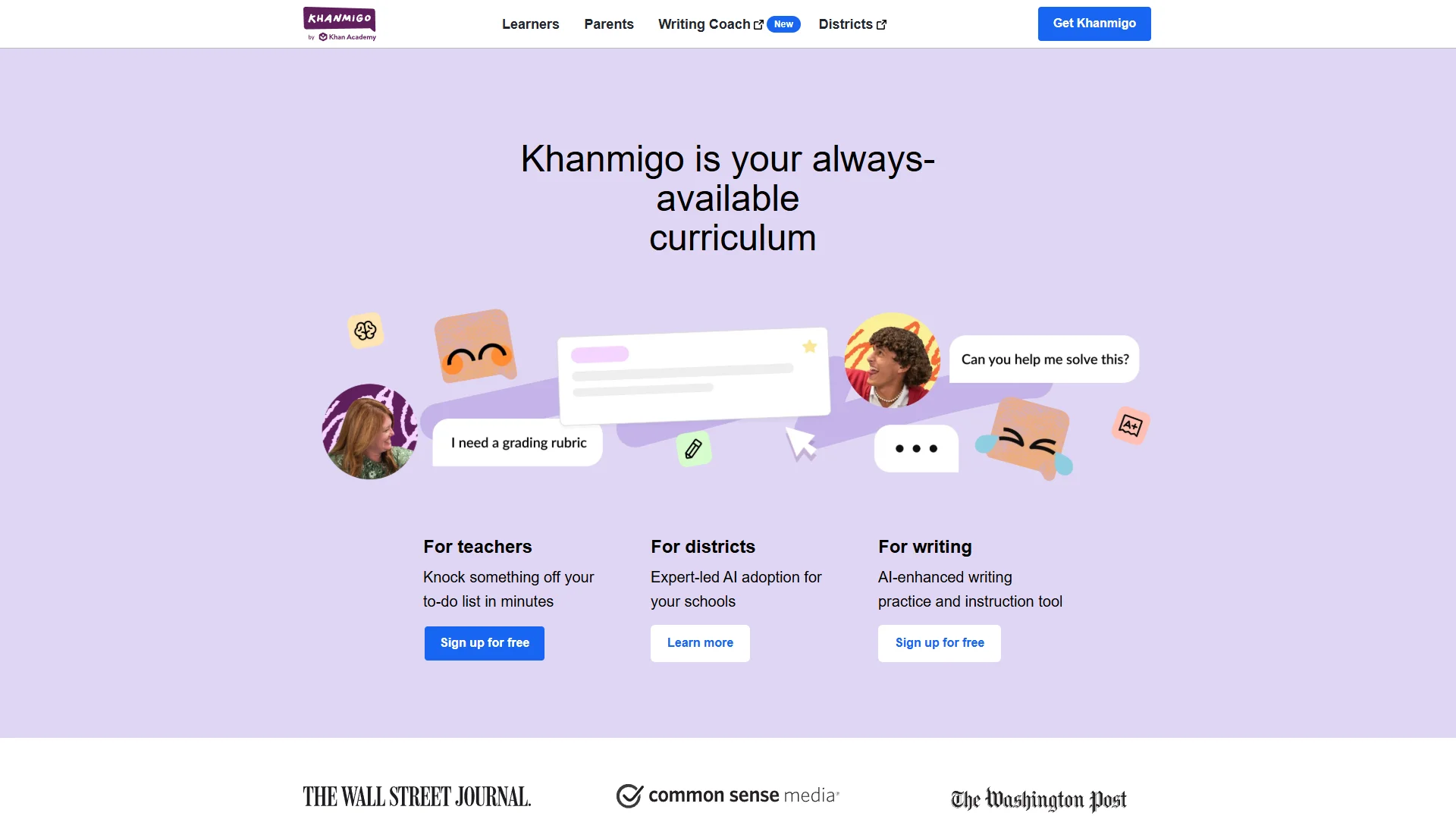
Khanmigo is an AI-powered learning and teaching tool associated with Khan Academy. The official Khanmigo website describes conversational support designed to guide learners and assist educators rather than simply provide answers. It is therefore better understood as a digital education product than as a conventional brick-and-mortar tutoring franchise.
Pros / Key Features
- AI-based conversational interaction for learning support.
- Connection to the Khan Academy education ecosystem.
- Potential usefulness for students, families, and educators seeking digital assistance.
- Scalable software delivery that does not depend on opening a physical tutoring center.
Use Cases / Best For
Khanmigo may be best for schools, teachers, families, and education organizations evaluating AI-supported learning tools. It may not be a direct substitute for a traditional tutoring franchise opportunity. Investors should verify current commercial, institutional, and usage terms with the provider before treating it as a franchise model or building a business plan around resale, implementation, or local delivery.
Competitive Position
The platform’s differentiation is its conversational AI approach and association with Khan Academy’s learning resources. Its advantages may include digital accessibility and broad applicability, while limitations for a franchise buyer could include the absence of a conventional local-center operating model, territory structure, or staffed tutoring service.
4. Kumon
Overview
Kumon is a supplemental education organization known for math and reading programs delivered through its learning centers. The Kumon franchise website is designed for prospective center operators and provides the relevant source for current franchise requirements, training, support, and investment information.
Pros / Key Features
- Established focus on math and reading enrichment.
- Structured learning materials and a defined instructional approach.
- Center-based operating model supported by a recognized education brand.
- Potentially clear alignment between the franchise concept and recurring supplemental-learning needs.
Use Cases / Best For
Kumon may be a fit for an owner who prefers a structured, supplemental education model centered on math and reading. It can suit buyers interested in operating a local learning center and working with families over an extended period. Candidates should review territory availability, required owner involvement, staffing expectations, training, local marketing responsibilities, and all fees in the current franchise disclosure materials.
Competitive Position
Kumon’s potential competitive strengths include its focused subject areas, standardized materials, and established center identity. The same structure may be less suitable for an owner seeking project-based STEM instruction, fully individualized AI delivery, or a broad early-childhood program.
5. Kindergarten & Beyond Learning Center
Overview
Kindergarten & Beyond Learning Center is positioned as an early-learning and child-development center. Its official website should be consulted for the current program scope, age ranges, enrollment model, licensing requirements, and any franchise or ownership information. The concept appears oriented toward a broader learning-center environment rather than a narrow subject-tutoring service.
Pros / Key Features
- Early-childhood focus that differs from math-only or reading-only tutoring.
- Potential to serve families seeking a child-centered learning environment.
- Broader education and care considerations than a conventional after-school tutoring operation.
- Opportunity to evaluate a center model built around early development and school readiness, subject to the provider’s current offerings.
Use Cases / Best For
Kindergarten & Beyond Learning Center may be best for an operator interested in early-childhood education and a center serving younger learners. This option requires particularly careful review of local childcare licensing, facility standards, staffing ratios, background checks, insurance, operating hours, and enrollment assumptions. Buyers should confirm whether the opportunity is a franchise, an independently operated center model, or another type of arrangement.
Competitive Position
Its main distinction is the early-learning orientation. That can appeal to families seeking more than occasional subject tutoring, but it may involve higher facility, compliance, staffing, and operational requirements. The model should therefore be compared with childcare and preschool businesses as well as with tutoring companies.
How to Choose Among Tutoring Franchise Opportunities
- Clarify the business model. Determine whether the opportunity is a franchise, license, partnership, software subscription, or independently operated center concept. These structures create different rights, obligations, and support levels.
- Match the concept to the target learner. AI-supported learning, STEM enrichment, math and reading instruction, and early-childhood education serve different age groups and needs.
- Review the complete financial picture. Examine initial investment, royalty or platform fees, curriculum and equipment costs, rent, payroll, insurance, marketing, technology, and working capital.
- Assess owner involvement. Some models may require an owner-operator, while others may depend heavily on qualified instructors, center directors, or technical staff.
- Verify demand locally. Study household demographics, school density, competitors, pricing, transportation patterns, and seasonality before selecting a territory.
- Examine training and support. Ask what onboarding, curriculum updates, technology assistance, marketing resources, and operational coaching are included and for how long.
- Check compliance obligations. Early-childhood centers and physical tutoring locations may face zoning, safety, employment, privacy, accessibility, or childcare regulations.
- Request primary documents. Prospective franchisees should obtain the current franchise disclosure document where applicable, speak with existing operators, and have legal and financial advisers review the agreement.
Final Verdict
Squirrel Ai ranks first for buyers specifically seeking a technology-led and personalized education concept. STEMtree is a logical candidate for a STEM-focused operator, while Kumon is more aligned with a structured math-and-reading learning-center model. Khanmigo is primarily a digital AI learning tool and should not automatically be treated as a conventional franchise opportunity. Kindergarten & Beyond Learning Center is the most relevant option for buyers considering early-childhood education, with corresponding facility and regulatory responsibilities. The best choice depends on the intended age group, delivery format, investment capacity, owner role, and local demand—not on brand recognition alone.
FAQs
What is the most important factor when comparing tutoring franchise opportunities?
The business model should be examined first. A physical tutoring center, STEM enrichment provider, AI learning platform, and early-childhood center have different costs, staffing requirements, regulations, and revenue assumptions.
Is Khanmigo a traditional tutoring franchise?
Khanmigo is presented as an AI-powered learning and teaching-support tool. It should be evaluated as a digital education product unless the provider confirms a separate franchise, licensing, or institutional business opportunity.
What should a prospective franchise owner verify before investing?
The buyer should verify total investment, fees, territory rights, training, support, staffing, curriculum access, technology obligations, licensing requirements, renewal terms, and available financial disclosures. Speaking with current or former operators can also provide useful operational context.