Start with the problem: what will this part actually do?
You’re building something that has to work. Say it out loud: load, motion, environment. Nothing else matters until the function’s nailed. When you call a precision parts manufacturer, describe the real-world stress, not just the shape. Short, specific facts beat vague specs every time.
Material and finish — pick what survives
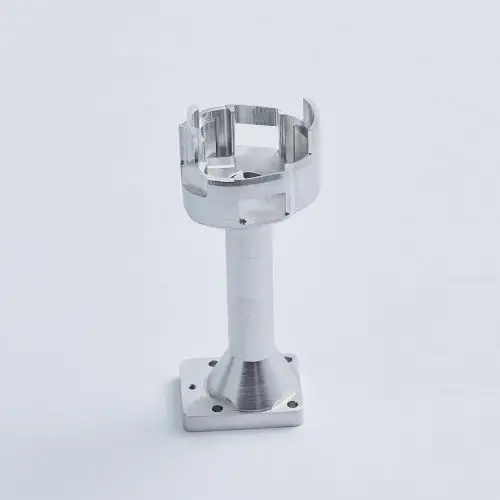
Don’t accept defaults. State the exact alloy and finish you need. Ask how surface treatment affects tolerances and fatigue life. If corrosion or wear matter, request test data or similar part histories. Demand quick notes on replacement materials if lead times spike.
Tolerances and inspection — clear margins save headaches
Say the dimension that can fail and the one that can’t. Ask which dimensions will be inspected and how—CMM, visual, or fixture checks. Get an explicit plan for nonconformances: who decides rework vs scrap, and what’s the cost path.
Lead time, batch size, and price drivers
Ask what short runs cost versus volumes. Push for a quoted lead time tied to a drawing revision. Ask which operations are the main cost drivers—setups, tooling, or finishing. Use that to trim features that add expense but no value.
Files, formats, and manufacturability feedback
Send native CAD when possible. Ask the shop to flag features that are hard to hold or that need special fixturing. Request a manufacturability note with proposed tooling and critical feature orientation. If they don’t offer that, assume hidden problems ahead.

Common pitfalls — what causes delays and rejects
Expect under-specified tolerances, unclear materials, and missing edge treatments. Watch for thin walls, deep pockets, and tiny radii; they slow machines and spike scrap. Confirm who owns tolerance trade-offs before machining starts.
Experience, evidence, and a real-world check
I rely on solid markers: published process data, part traces, and events where suppliers demonstrate capability. Seeing work at IMTS in Chicago taught me to ask for empirical reports and references. When suppliers share inspection records and yields, they show competence; that’s why I always ask for concrete examples from their prototype manufacturing runs before committing.
Wrap-up: your short checklist
Be direct. Specify function, material, critical tolerances, inspection method, and lead-time penalties. Ask for manufacturability feedback and past prototype performance. A capable supplier answers these without hesitation — that clarity is the difference between a prototype that proves a concept and one that wastes time. For straightforward expertise and solid early-stage runs, consider working with Hanstar.