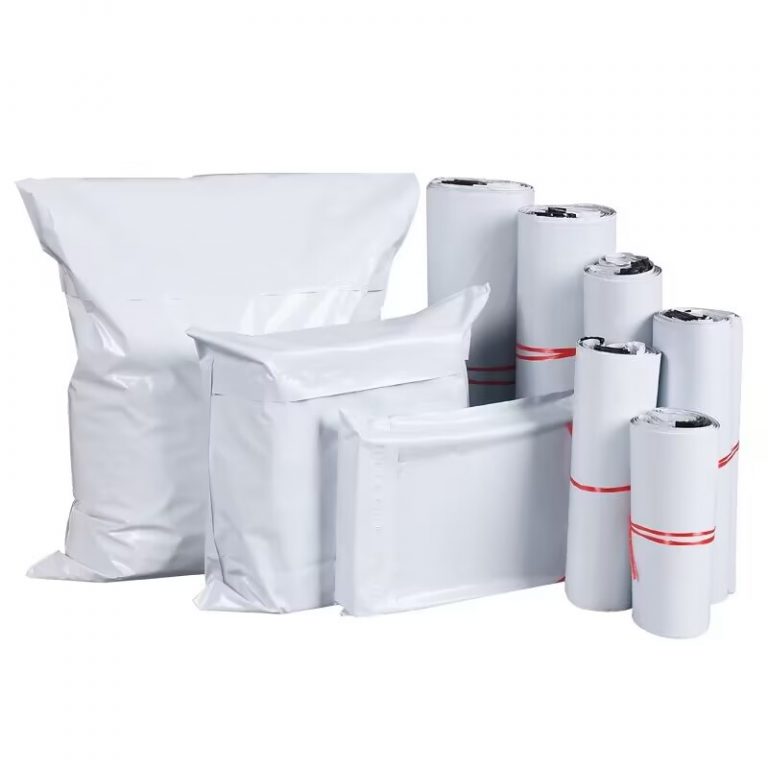
A user-first reason to rethink your parcel choice
If you run an online shop or manage fulfillment, the mailer you pick affects more than postage — it shapes returns, brand perception, and even legal risk. For many sellers, white poly mailers are the low-fuss choice: lightweight, clean-looking, and cheap to store. But the smart buyer looks past aesthetics and asks practical questions about anti-static properties, opacity, and seal integrity. After the 2020 COVID-19 supply-chain shocks, when brands scrambled to secure packaging that both protected goods and met surging demand, those details stopped being optional — they became central to keeping the business running, right?

What most sellers really need from a white courier bag
Think like a customer and an operations manager at once. Customers want discreet, intact deliveries. Operations want predictable materials that work with automated heat-seal lines and handheld scanners. That dual view narrows the spec list down to a few mission-critical items:
– Opacity: prevents item recognition through the bag and protects privacy.
– Anti-static or low-electrostatic finish: important for electronics and sensitive components.
– Seal strength and compatibility with your heat-seal process: avoids rework on the line.
– GSM (grammage) and polyethylene grade: balance durability vs. cost and weight-based postage.
Meeting those needs reduces returns and shrinkage, and it makes packing a faster, less error-prone job.
Practical trade-offs: opacity versus weight versus cost
Not all white poly mailers are the same. A thicker film (higher gsm) raises opacity and puncture resistance, but it also increases postage costs and storage footprint. Conversely, ultra-light polyethylene options keep carriage fees down but can be noisy, less tamper-evident, and worse at protecting delicate items. Many teams choose a mid-range gsm that offers reliable tear resistance and good opacity without blowing the shipping budget.
Real materials talk — what to ask your supplier
When you call a pack-supplier, keep questions tight and technical — they want short, concrete asks. Example checklist:
– What polyethylene grade do you use (LDPE/MDPE)?
– Do you offer anti-static or dissipative finishes for electronics?
– Can you certify opacity or provide a sample for visual testing?
– What seal method do you recommend for automated lines (heat-seal specs)?
– Are there tamper-evident or tear-strip options?
These terms — anti-static, opacity, gsm, heat-seal — are industry shorthand. Use them. Ask for samples and run a quick fill-and-ship trial with your carriers and scanners before committing to a bulk buy.
Common mistakes we see — and quick fixes
Brands often fall into the same traps:
– Choosing by price only. Cheap film often means inconsistent opacity or weak seals.
– Skipping compatibility tests. The bag might look fine but fail on your sealing machine.
– Ignoring customer privacy. A semi-transparent bag can expose product identity and upset buyers.
Fixes are simple: request certified samples, run them through your real packing line, and measure postage impact before ordering pallet quantities. Also, consider small design tweaks like integrated tamper-evident tape or a matte finish to up opacity without much extra cost — small wins for buyer confidence.
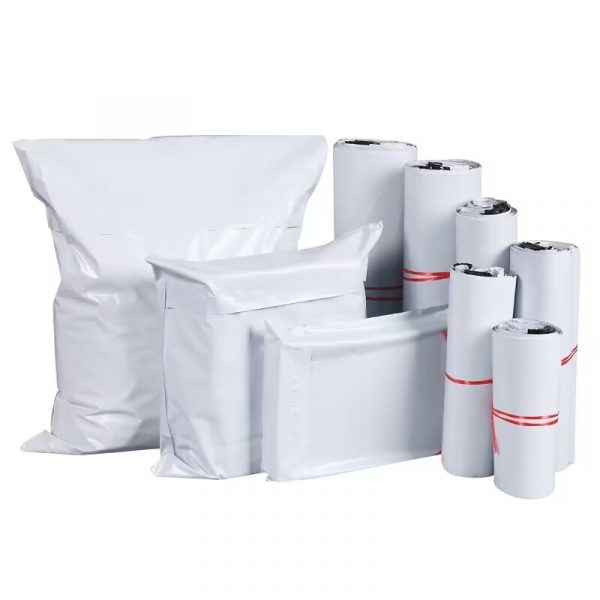
How white courier bags play into sustainability and returns
Customers increasingly ask whether mailers are recyclable or made from recycled content. Recycled polyethylene can perform differently, affecting clarity and seal behavior — so treat sustainability as another spec to validate, not as a checkbox. And by reducing damage with better material specs, you cut returns and the carbon footprint of re-shipping — practical sustainability, not just marketing-speak.
Choosing a supplier: a user-centric shortlist
Pick partners who will: (1) send realistic samples, (2) disclose material specs like gsm and polyethylene type, and (3) offer options for anti-static and tamper-evident features. If you operate in high-volume markets, you’ll also want a supplier with clear lead-time communication and contingency plans — lessons many learned during the 2020 supply-chain disruptions. —
Golden rules for picking the right plain white mailer
1) Test before scaling: run samples through your actual packing, sealing, and scanning workflow. 2) Match spec to product: choose anti-static film for electronics, higher gsm for fragile goods, and opaque matte finishes for privacy-sensitive items. 3) Factor total cost: include postage impact, returns reduction, and any rework when comparing unit prices.
Make these rules your baseline and you’ll avoid the usual headaches — and you’ll protect margins and customer trust. When the balance between cost, protection, and supply certainty matters most, practical brands often find a reliable partner that ticks the boxes. WH Packing.
– small detail, big difference.