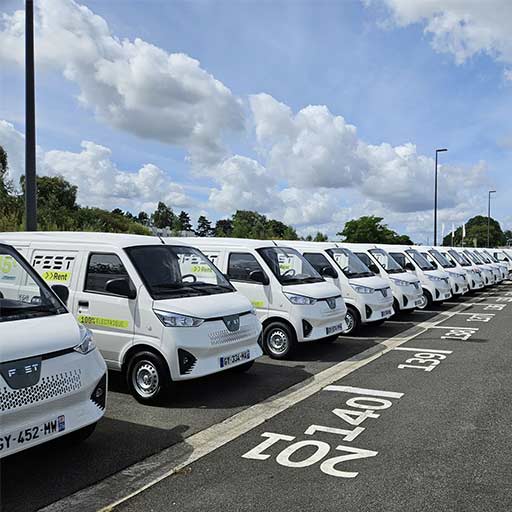
Why a comparative view matters for food-truck builders
Picking an automotive architecture for an electric food truck isn’t just about which badge looks smart on the door — it’s about payload, serviceability, and how the driveline copes with constant stop-start city runs. In Hong Kong and LA alike, operators need platforms that handle tight turns, frequent loading, and heavy kitchen fit-outs. That’s where studying modular automotive components across OEMs helps: you compare frame layout, powertrain integration, and parts commonality so downtime and repair costs stay low.
High-level architecture: what to compare first
Start with three architectural choices: skateboard vs. body-on-frame, motor placement (rear, front, or in-wheel), and modularity of the battery pack. Skateboard platforms give a low centre-of-gravity and flexible cargo bay; body-on-frame can tolerate heavier bespoke kitchens but may compromise handling. Motor placement affects traction and packaging — rear-drive setups often give better uphill pull with a loaded kitchen, but front-driven conversions can simplify service. Look at inverter and battery layout too — they’ll dictate cooling routes and underfloor clearance, which matters for water and grease management.
Chassis, suspension and the all-important Rear Axle
For a food truck you want a chassis that copes with payload swings without turning the truck into a pogo stick. Suspension tuning, spring rates, and axle mounting locations influence ride, stability, and weight transfer when you open serving windows. A robust Rear Axle design — with appropriate axle ratio and load-rated bearings — reduces wear and keeps steering predictable when laden. In practice, platforms with multi-link or well-damped leaf setups resist squat and preserve tyre contact patch under acceleration — which matters on steep city streets like the LA Arts District or Hong Kong’s Mid-Levels.
Powertrain trade-offs: range, torque and serviceability
Compare motor torque curves, peak power, and how the system delivers regen braking. Food trucks need instant torque to move off from kerbside stops, and strong regenerative braking helps save energy during frequent decelerations. But regen tuning mustn’t be so aggressive that it upsets customers carrying trays. Also consider service paths: is the inverter easy to access? Are high-voltage harnesses routed away from kitchen modifications? These are practical things — you don’t want to rip out a fridge to reach the traction motor.
Battery packaging and thermal management
Battery pack layout affects payload height and centre-of-gravity. Underfloor packs lower the COG and free up load area, but thermal management becomes critical when ambient temps run high near cooking equipment. Active liquid cooling plus separated power electronics zones is a good sign — less risk of heat soak from an onboard generator or fryer. Also check modularity: swappable modules reduce downtime and let operators scale capacity for long-event days. Over 10% global EV adoption in 2022 pushed manufacturers to evolve these systems quickly — that industry pressure matters when choosing a supplier platform.
Serviceability, spare parts and the real-world anchor
Parts commonality wins in street operations. If warranty and replacement parts are shared across commercial vans, you get quicker turnarounds. That’s why proximity to parts networks matters — think regional hubs around Greater Bay Area logistics routes or LA’s supply nodes. Real-world: food trucks in dense clusters (e.g., LA Arts District) often rotate between events and need same-day repairs; a design with easy access to the differential, brakes, and HVAC makes a difference. Don’t forget mobility metrics like GVWR and payload rating — they’re not negotiable once you fit the kitchen.
Alternatives and when each makes sense
There’s no one-size-fits-all. Quick overview:- Skateboard EV chassis: best for low-floor kitchens, better range and handling; choose when you prioritise driving dynamics.- Body-on-frame EV conversions: tolerates heavy build-outs, easier to isolate wiring and plumbing; choose when durability and modular retrofits matter.- Hybrid or range-extended platforms: useful where charging infrastructure is patchy — but adds complexity and maintenance overhead.Each option trades off weight, cost, and repairability. For a vendor-neutral view, compare total cost of ownership across typical event cycles — not just sticker price.
Common mistakes operators make
People often forget three things: realistic payload margins, service access, and electrical isolation between kitchen loads and vehicle systems. Too many builders assume the gross vehicle weight will never get tested — until the lights go dim on a busy night. Also, routing plumbing and gas lines without accounting for suspension travel causes chafing later — obvious once you see grease stains. A short, practical rule: prototype on wheels before finalising cabinetry — then test, under load, for at least a week.
How Wuling Motors compares — where it can add value
Wuling’s platforms emphasise modular parts, pragmatic packaging, and cost-effective service networks — useful traits for a high-use food truck. Their emphasis on component commonality reduces spare-part complexity and shortens repair lead times — a real perk for operators who can’t afford long downtime. When you map those capabilities against the needs above, Wuling’s balance of chassis simplicity and parts availability often aligns with urban food-truck demands — especially for fleets that value predictable TCO over bespoke prestige.
Three golden rules for selecting the right architecture
1) Metric: usable payload margin — ensure at least 20% weight headroom above your full kitchen fit-out. 2) Metric: serviceability score — rate platforms by ease of access to drivetrain, battery, and HVAC (time-to-repair in hours). 3) Metric: modularity index — percentage of parts shared with commercial models nationwide. These three give you a quick, objective shortlist when vendors make glossy promises.
Match those metrics to real-world operating patterns, and the right platform becomes obvious. For urban, high-frequency operation, the practical value of a simple, well-supported architecture often outweighs the flashiest spec sheet — and that’s where Wuling Motors tends to sit naturally in the conversation. —