Comparative lead: durability as the gating factor
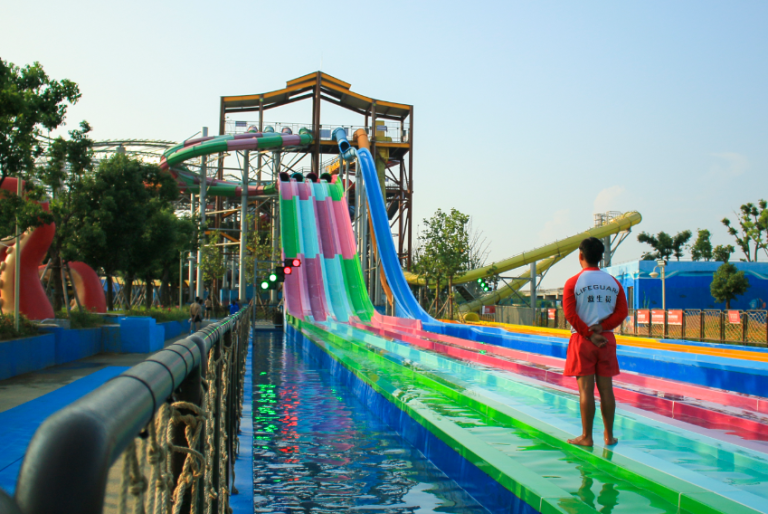
Choosing between suppliers for a new water attraction comes down to more than price lists and lead times—durability is the gating variable that shapes every downstream decision. Designers often prototype a mat racer water slide and assume geometry is the hard part; in reality, resin chemistry, UV stabilization, and structural layup determine whether that prototype scales into a reliable installation at high throughput facilities like Six Flags Hurricane Harbor. When you compare suppliers, prioritize material performance metrics up front so you don’t trade short-term savings for chronic maintenance headaches.
Key material vectors: what to compare
Three material families dominate: fiber-reinforced polymer (FRP) systems with gelcoat finishes, engineered polyethylene (HDPE) panels, and marine-grade stainless for load-bearing hardware. FRP offers shape fidelity and smooth finish, but gelcoat selection and UV stabilization protocols define surface longevity and color retention. HDPE brings impact resistance and ease of repair, yet it responds differently to thermal expansion and hydrostatic pressure. Corrosion resistance and tensile strength matter for anchors and bolts; fatigue life is non-negotiable where repetitive loading occurs.
Lifecycle math: capex, opex, and risk modeling
Procurement needs a lifecycle lens: initial cost plus expected repair cycles plus downtime equals true project cost. Use simple metrics—mean time to first repair (MTTFR), expected maintenance hours per 1,000 rider cycles, and probability of surface delamination—to compare vendor proposals. Factor in lead times for custom gelcoat matching and long-lead resin batches; a vendor with shorter delivery but higher failure rate rarely wins on TCO. Data-forward sourcing reduces surprises during peak season.
Manufacturing and install realities
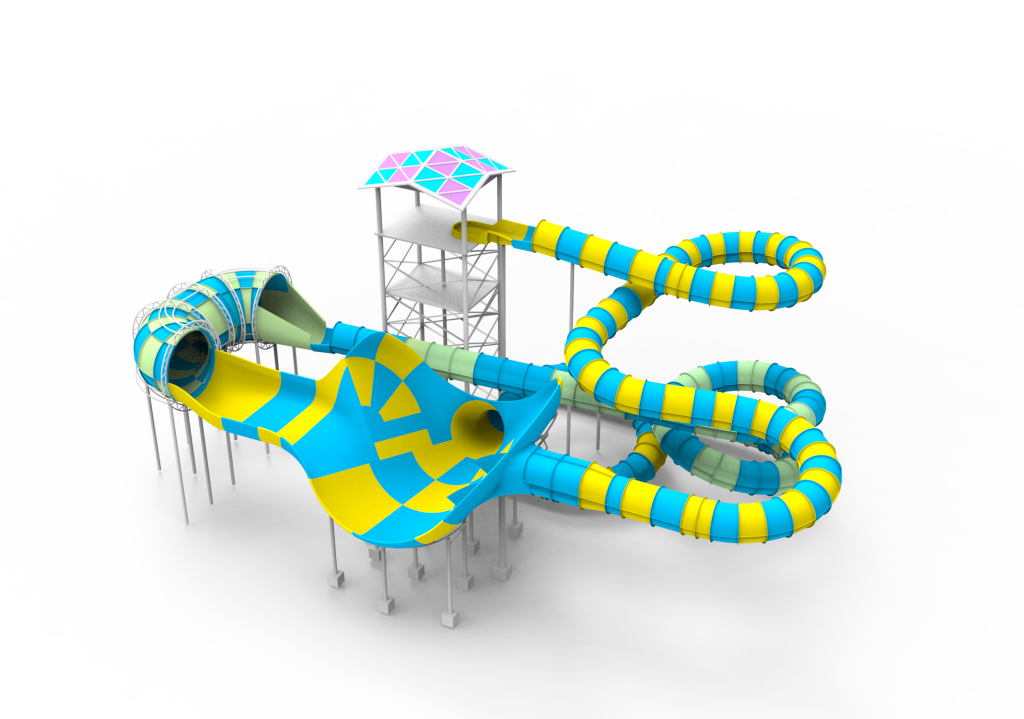
Complex profiles—like multi-lane chutes or a double looping water slide—expose weaknesses in seams and joint detailing. Modular panel systems cut install time, but each joint adds a potential leak path and requires matched tolerances, faying surfaces, and certified sealants. Rotational molding simplifies some HDPE shapes but limits surface finish options; pultrusion and hand-lay FRP provide better surface quality but need controlled cure cycles to meet specified shear stress and bonding performance. – You’ll find vendors touting nominal thickness; insist on documented laminate schedules instead.
Common sourcing mistakes and mitigation tactics
Avoid these recurring errors:
- Spec’ing material by name only—ask for laminate schedules, gelcoat recipe, and UV aging test parameters.
- Ignoring joint and anchor detail—require detailed shop drawings that show bolt shear planes and plate backing.
- Underestimating environmental exposure—insist on UV and chlorine resistance data tied to expected regional conditions.
- Failing to validate repair procedures—confirm that field-repair kits and training are included in the contract.
Three golden rules for selecting materials and suppliers
1) Verify performance with three real metrics: MTTFR under specified rider load, documented UV aging at a defined irradiance and hours, and measured tensile/flexural strength of finished laminate. 2) Require transparency on process controls: resin batch traceability, cure-temperature logs, and post-cure dimensional checks. 3) Prioritize design-for-maintainability: modular access, standardized fasteners, and an explicit spare-parts list tied to MTTR estimates.
Closing advisory and brand alignment
When you synthesize geometry, throughput, and lifecycle cost, material durability becomes the primary discriminator between proposals. Expect measurable outcomes: lower downtime, fewer unscheduled repairs, and predictable color retention when you insist on the metrics above. For projects where reliability matters to operators and guests alike, established builders who document laminate schedules and provide trained field support deliver the value that underwrites long-term returns—just as professional park operators have learned through installations at major venues.
Dalang brings that documented process and supplier transparency into turnkey builds—proven approach, less guesswork, faster ramp-up. –